
Gaye Hammond’s Not-So-Secret Fertilizer Blend Recipe (Grow Better Plants At Half The Cost)

Ditch overpriced fertilizers. This DIY blend costs pennies per batch and will make your roses and flowering plants thrive like never before.
If you grow roses or flowering landscape plants, you probably spend considerable time and money on fertilizer each year.
Fortunately, Gaye Hammond’s DIY fertilizer blend costs far less than many of the popular fertilizers, works wonders on your plants, and only needs to be applied twice a year. Best of all, you can customize it to match your soil’s specific nutrient needs.
(As an Amazon affiliate I earn from qualifying purchases. Please see my full disclosure HERE).
Gaye is the Past President of the Houston Rose Society. Gaye is also the study liaison between the Houston Rose Society and the Texas A&M AgriLife Extension Service in connection with EarthKind®. Gaye has probably forgotten more about roses than I will ever know.
Twenty years ago, Gaye realized she was spending more than $1200 on fertilizer for 200 roses and 200 blooming plants. She thought that there had to be a better way.
So, she coordinated with a couple of chemists and created a fertilizer blend that meets the nutritional needs of roses. She’s been using this recipe for 20 years and it is her go-to fertilizer as it works on every plant she has put it on.
Gaye’s Not-So-Secret fertilizer blend feeds the plants AND the soil for a whole 6 months, so it only needs to be applied in the spring and fall. She has had the best luck with this blend more than anything she’s ever purchased.
I have been using her fertilizer blend for two years now and can personally attest to its effectiveness. I use it on all 50 of my roses and my flowering landscape plants. Within 2 weeks or less of application, I start seeing basal breaks on most of my roses!
What is the Best Homemade Fertilizer?
Gaye’s Fertilizer blend is composed of natural soil amendments. But, you’ll be happy to know that no poop was used in the making of this fertilizer. Because who wants to deal with the smell and mess of manure when you don’t have to?!?
Fertilizer trends come and go, but when it comes down to it, all roses and landscape plants have certain nutrient needs that have to be met.
These needs can be met through organic or granular fertilizers. Both work fine, but I’ve found that organic fertilizers can help to level out low or high PH levels. They also encourage a thriving biome of soil bacteria that will help your plants thrive.
I grow 50 roses in College Station, Texas, where we have salty, alkaline (high PH) tap water and alkaline soil. Granular synthetic fertilizers contain a lot of salt, which can build up over time and destroy your plants’ roots.
With my already-salty tap water, using an organic dry fertilizer blend was a no-brainer for me.
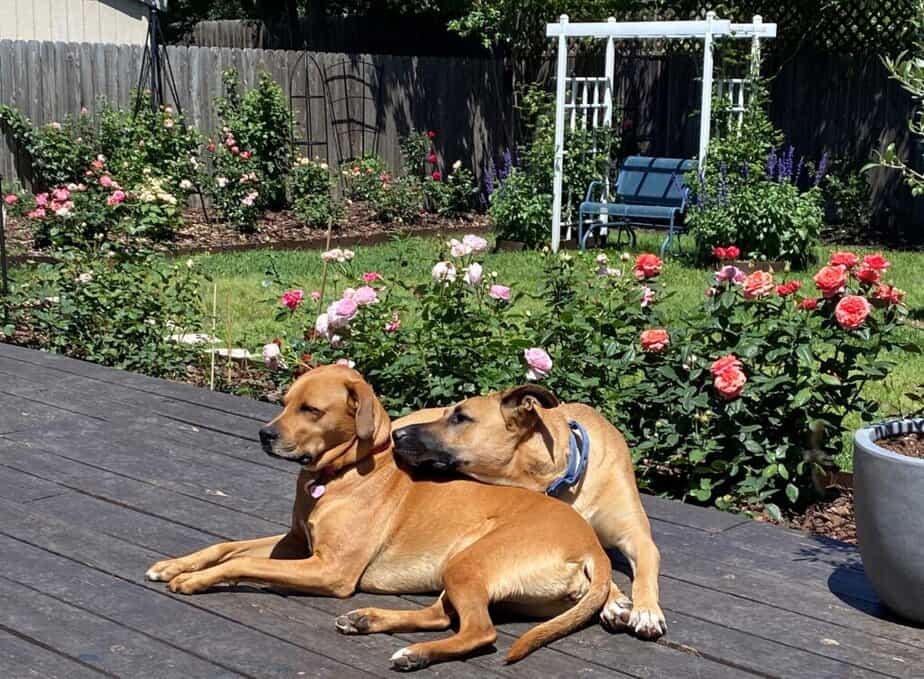
Gaye’s Fertilizer is composed of all-natural soil amendments that you can find at feed stores, big box stores, or the online links below. Gaye states in this Rosechat Podcast that she’s not necessarily an organic activist, but she wants to use what works.
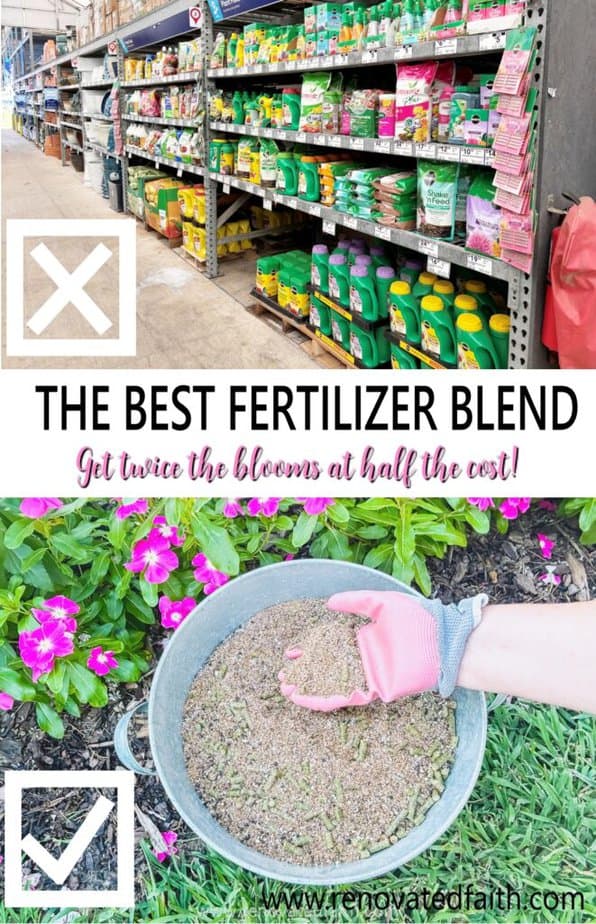
Gaye Hammond’s Not-So-Secret Fertilizer Blend
(the no stink, no mess, no poop variety!)
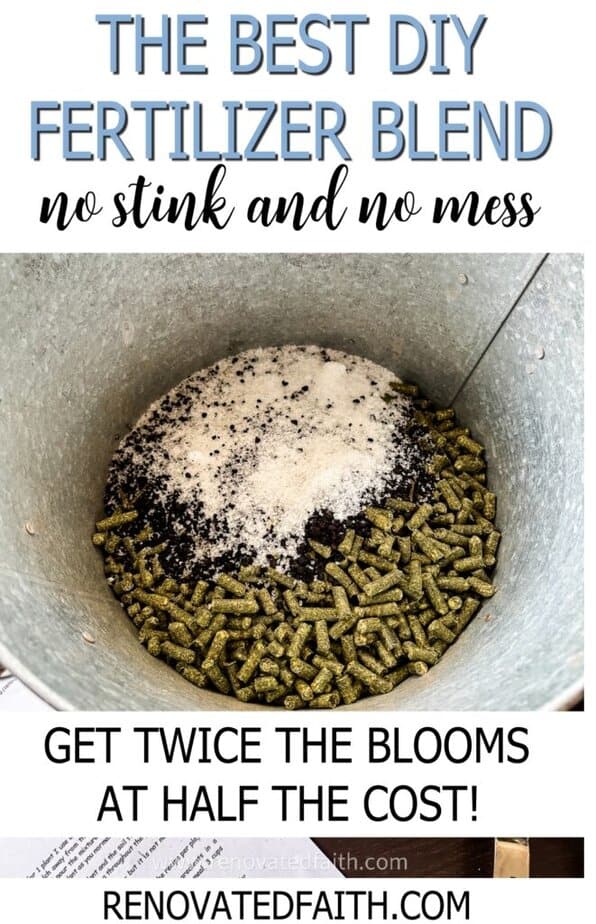
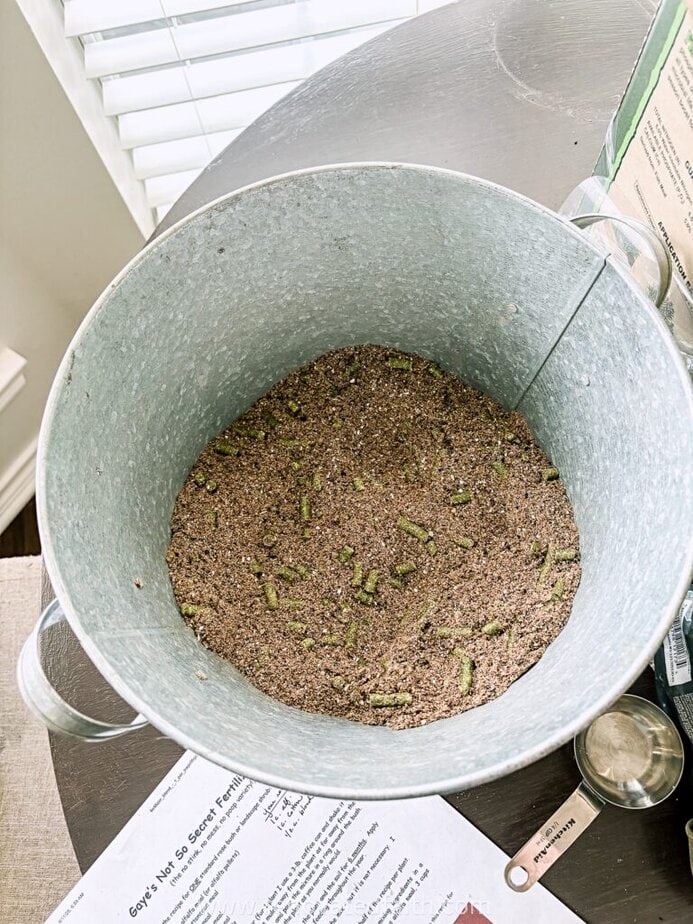
1 cup alfalfa meal (or alfalfa pellets) (2-0-1)
1 cup cottonseed meal (6-2-1)
1 cup fish meal (4-12-0)
½ cup blood meal (12-0-0)
¼ cup Epson Salt (Magnesium Sulfate)
You can access the printable version along with the rest of my free resource library by subscribing to my email list here: PRINTABLE FERTILIZER BLEND RECIPE
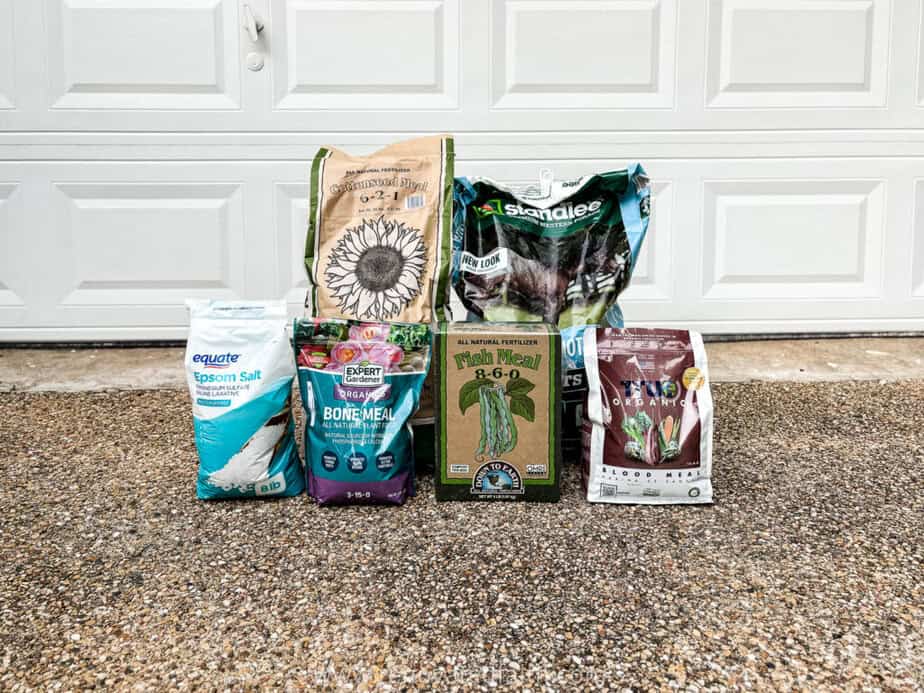
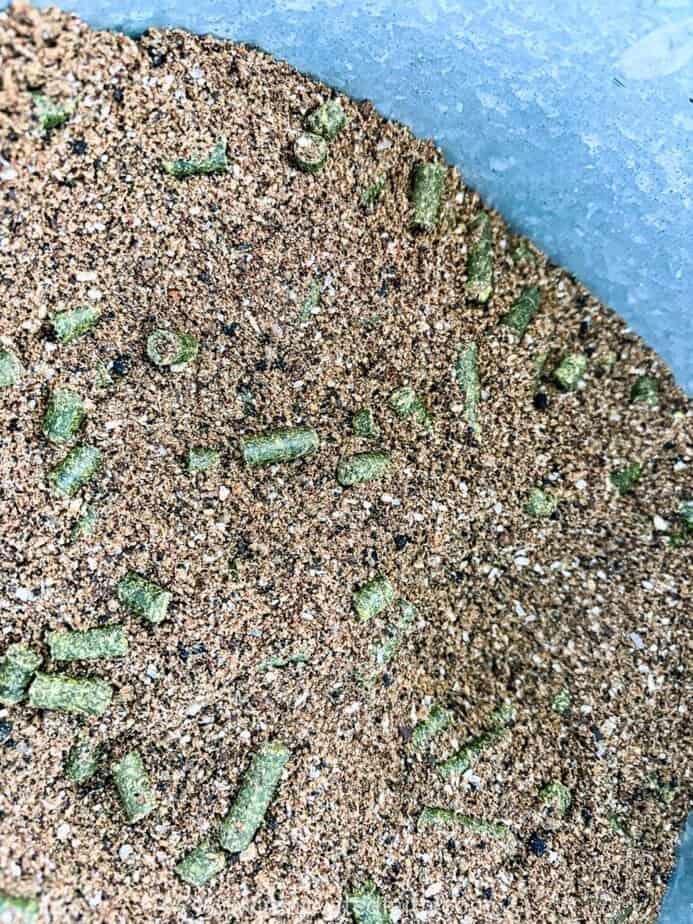
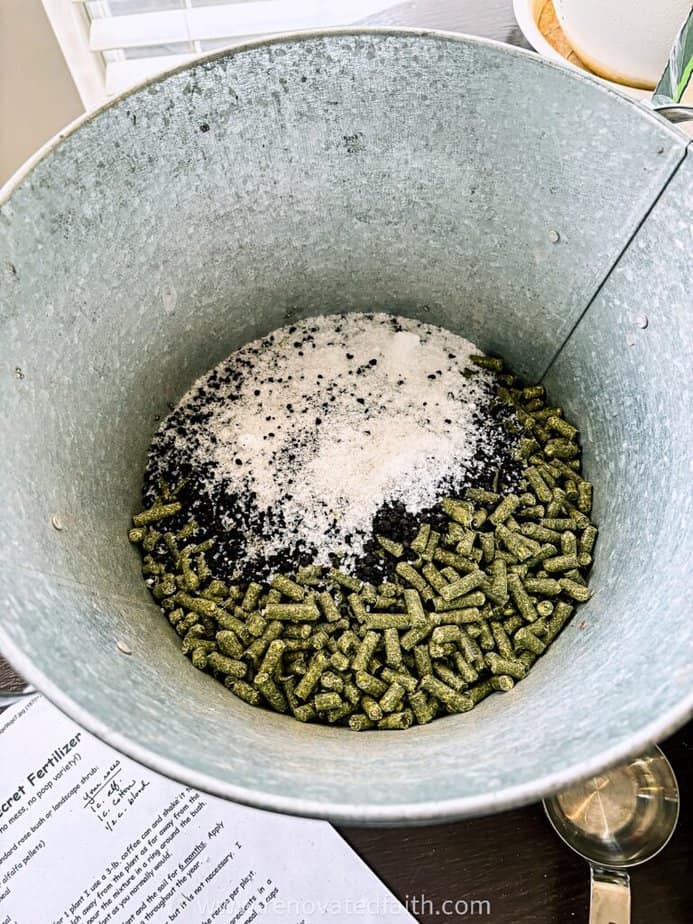
Mix all of the above together (for 1 plant, I use a 3-lb. coffee can and shake it to mix the ingredients).
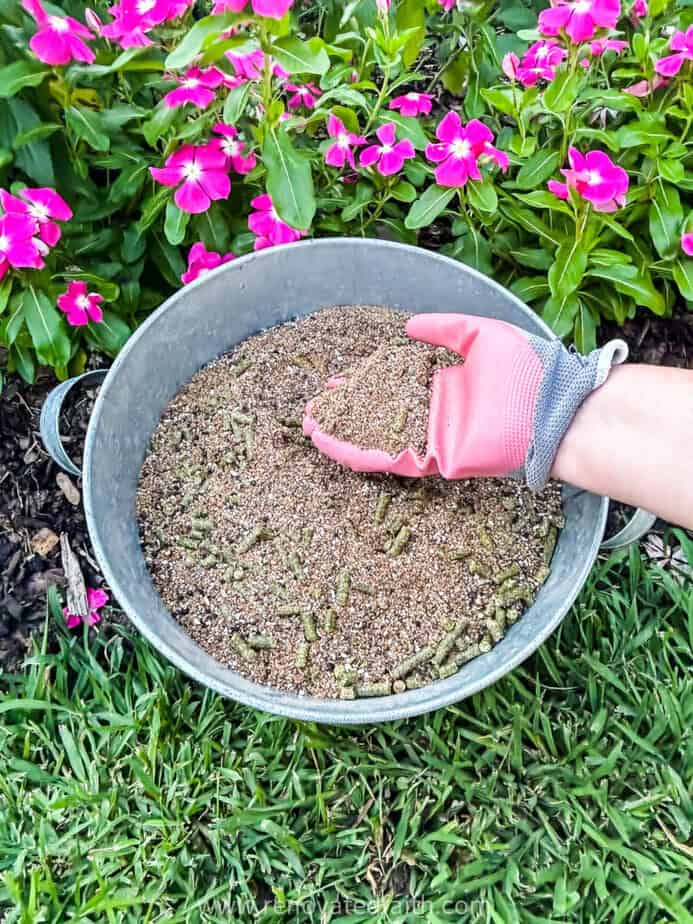
Rake the mulch away from the plant as far away from the base of the plant as the drip line and pour the mixture in a ring around the bush.
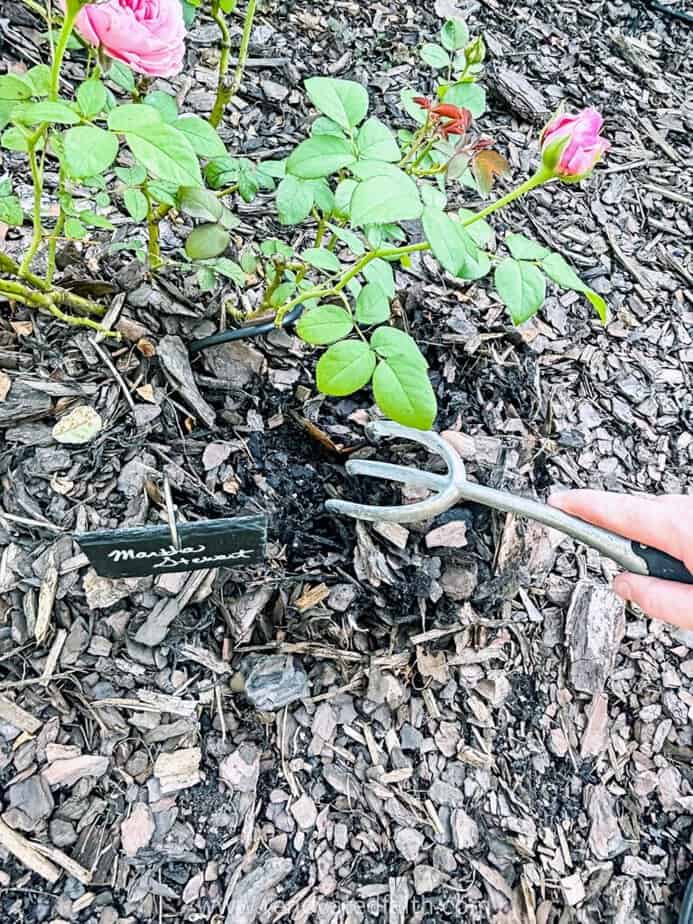
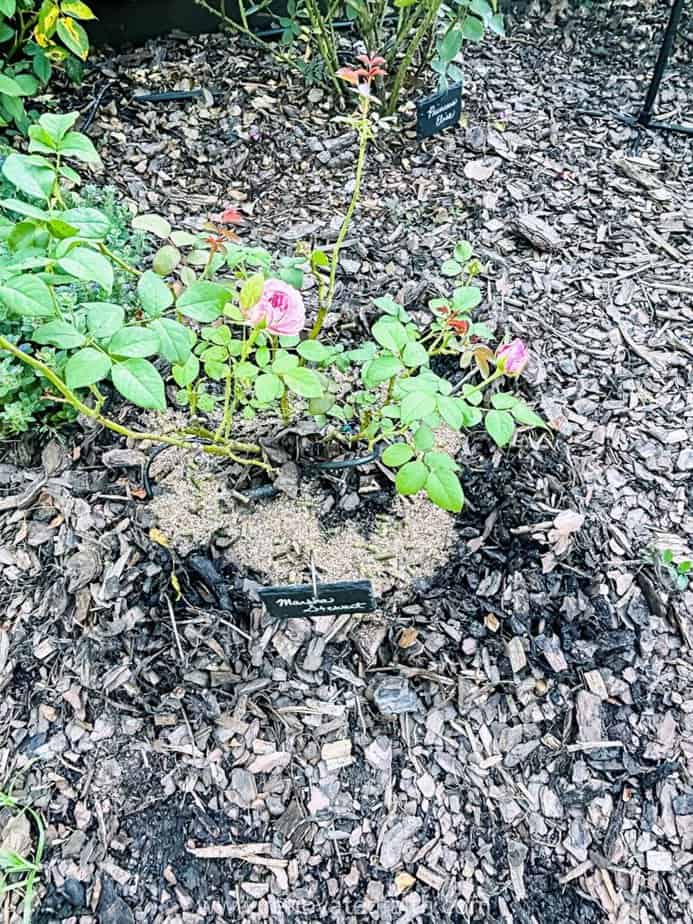
Cover the mix with mulch and water the plant as you normally would.
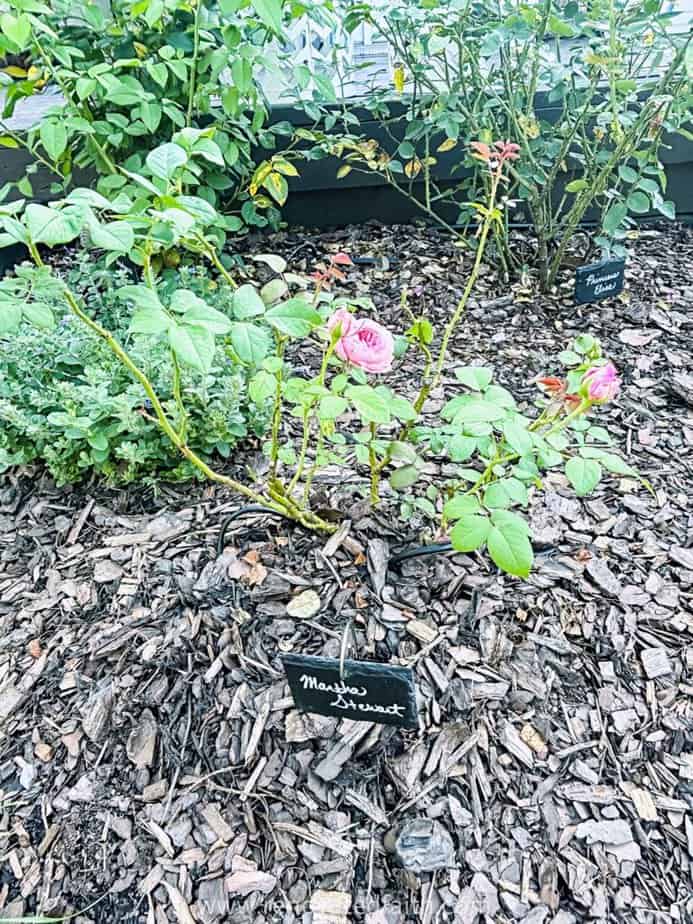
This provides supplemental nutrition for the plant and the soil for 6 months. Apply in early spring and early fall for continuous feeding through the year.
You can also add a slow-release fertilizer to the mix, but it is not necessary. I have used Osmocote (2 T. per plant)
For miniature roses or newly planted young plants, use half of the recipe per plant.
For feeding large numbers of plants, I have found mixing ingredients in a wheelbarrow the easiest method. (e.g. For 6 plants – 6 cups alfalfa meal, 3 cups bone meal, etc.
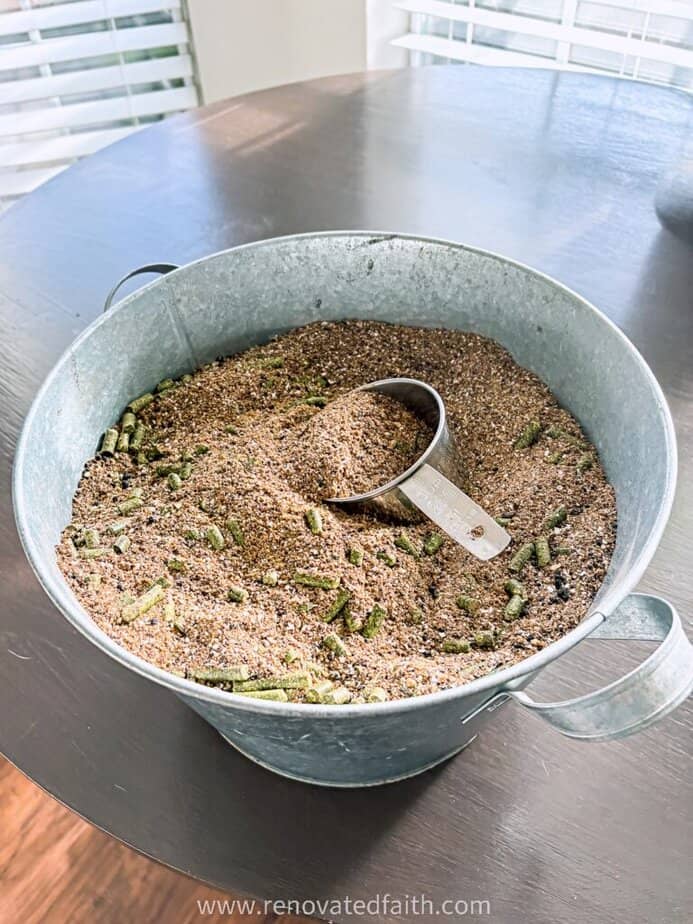
You can also print this recipe by subscribing to the email list here:
PRINTABLE FERTILIZER BLEND RECIPE
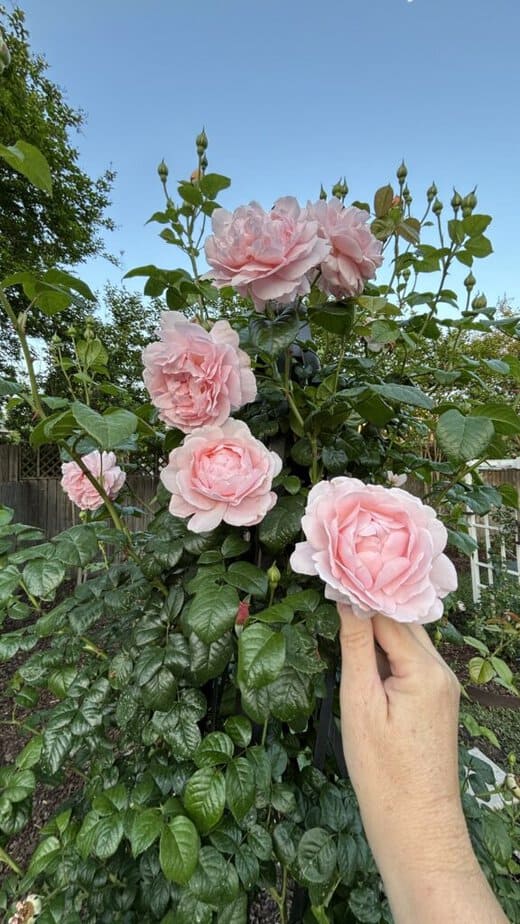
I always get lots of new basal breaks on my roses within a week or two of applying her fertilizer blend.
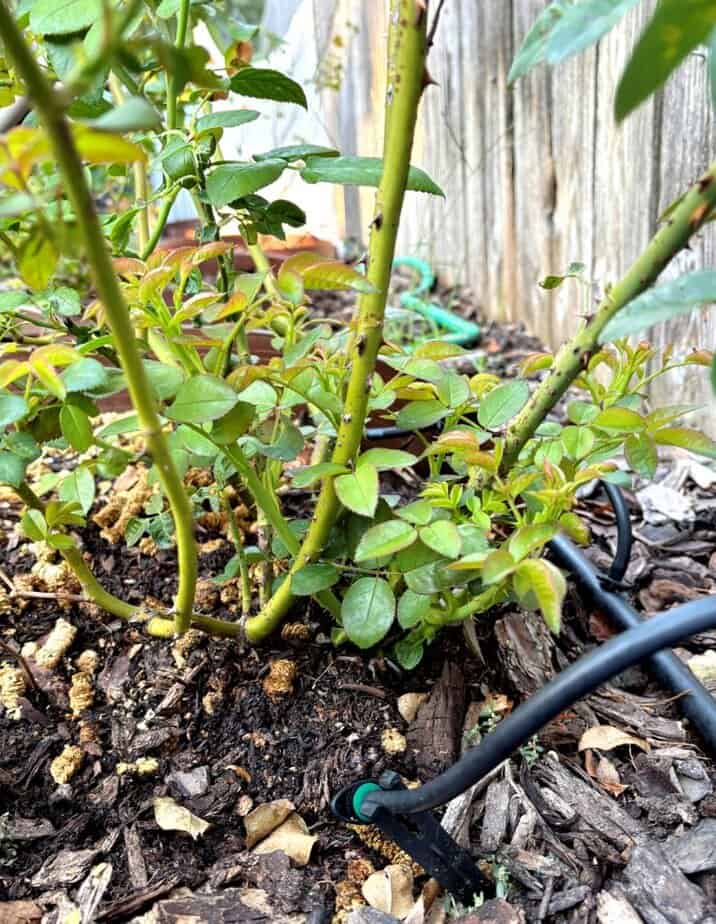
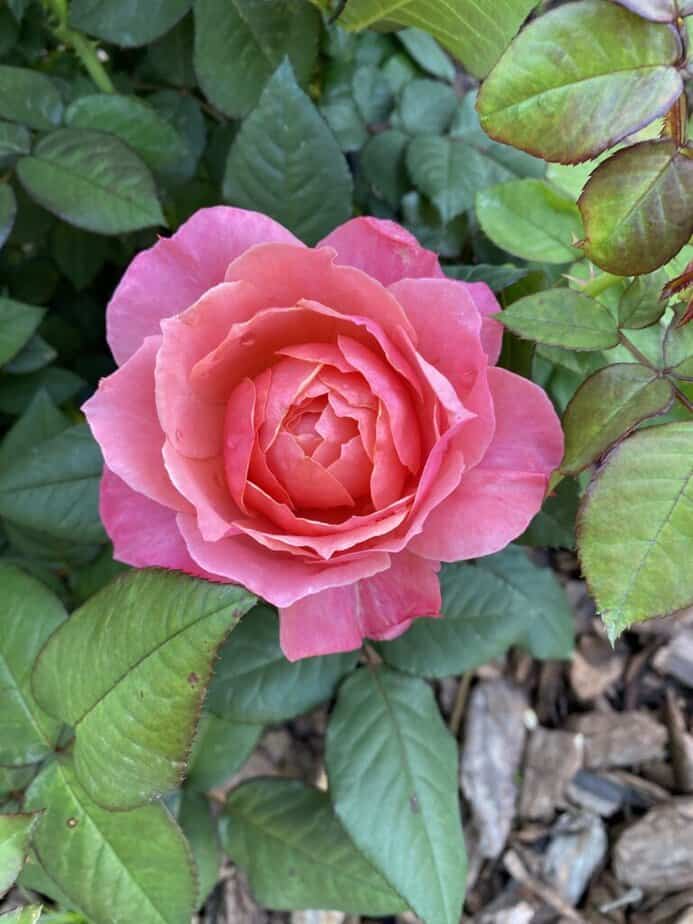
This is Ballgown Romantica and these are the basal shoots 1 week after adding fertilizer. I’m counting at least 12 basal breaks.
How Much Does This DIY Fertilizer Blend Cost?
Amendments are much more economical than store-bought fertilizer blends.
Because I have always wondered how much the DIY fertilizer blend cost versus Rosetone, I did a cost breakdown:
ROSETONE FERTILIZER – $9.05 per year per plant or $452.50 per year for my 50 roses
GAYE HAMMOND’S FERTILIZER – $5.74 per year per plant or $287.00 per year for my 50 roses
GAYE’S FERTILIZER WITH A SOIL TEST – $2.23 per plant or $111.50 a year for my 50 roses + soil test cost ($12) = $123.50 a year!*
*The soil test told me that I had dangerously high levels of phosphorus and to not add any for 5 years. Therefore, I made Gaye Hammond’s blend but subtracted the Phosphorus-containing amendments – the fish meal and bone meal. It saved me even more and is much healthier for my plants!
How to Customize This Fertilizer Blend to Your Soil’s Needs
When I first contacted Gaye, it was about chilli thrips, but I also got her advice on my soil. She recommended I get a $12 soil test and it’s the best thing I’ve ever done for my garden.
In the podcast I mentioned earlier (find it here), she mentions the importance of having a soil test done so you can fertilize according to what your soil needs
A soil test is critical if you don’t know the nutrient levels to begin with. It’s always a good baseline test.
Fertilizer only works if your soil needs what the fertilizer has.
Human nature is that if the plant isn’t doing well, we think it needs more fertilizer, and this can make the problem so much worse. By simply adding more fertilizer, you could have more challenges to overcome to get the plant healthy again.
In 2006, the Houston Rose Society gave away Belinda’s Dream roses to residents of a local subdivision in exchange for each person having a soil test performed.
I was amazed to hear that 89 percent of the soil tests showed high phosphorus levels. Phosphorus and other elements can actually be toxic at rates that are too high, which will kill your plants or cause them to struggle.
So, I did my own soil test done and, sure enough, Texas A&M said that my phosphorus was so high that I didn’t need to add more phosphorus for FIVE YEARS.
In Gail’s recipe, bone meal and fish meal both have a substantial amount of Phosphorus. I simply leave those out and my plants are happier and fertilizing them is much cheaper.
A good soil test will tell you what to avoid and what you need to add. Fixing these issues will cause your plants to thrive.
For example, my soil test told me I needed more Nitrogen. That’s not uncommon because Nitrogen is very transient in the soil. It also told me my PH level was too high and I had a lot of salt.
Soil tests are not created equally, but the two most reputable testing services are:
Texas A&M University Soil Testing | Oklahoma State University Soil Testing
Why I Look at Fertilizer Differently Now
I think my biggest takeaway from Gaye’s fertilizer was not just my roses thriving with hundreds of blooms (although that’s amazing!), but it opened my eyes to how to better fertilize plants. It also made me realize how the fertilizer industry isn’t always on our side.
Have you noticed that a lot of non-fertilizer products contain fertilizer? One example is Bayer Rose and Flower Care Systematic Insecticide with added fertilizer that has an NPK of 6-9-6.
They discreetly add fertilizer because they simply want you to have a temporary boost in blooms so you buy more of their product. They are not concerned about the health of your soil long-term or what your plant actually needs.
When I look at rows of fertilizers, I see lots of containers of products that contain Phosphorus and/or fertilizer salts that could be detrimental to my soil’s health and, therefore, my rose bushes.
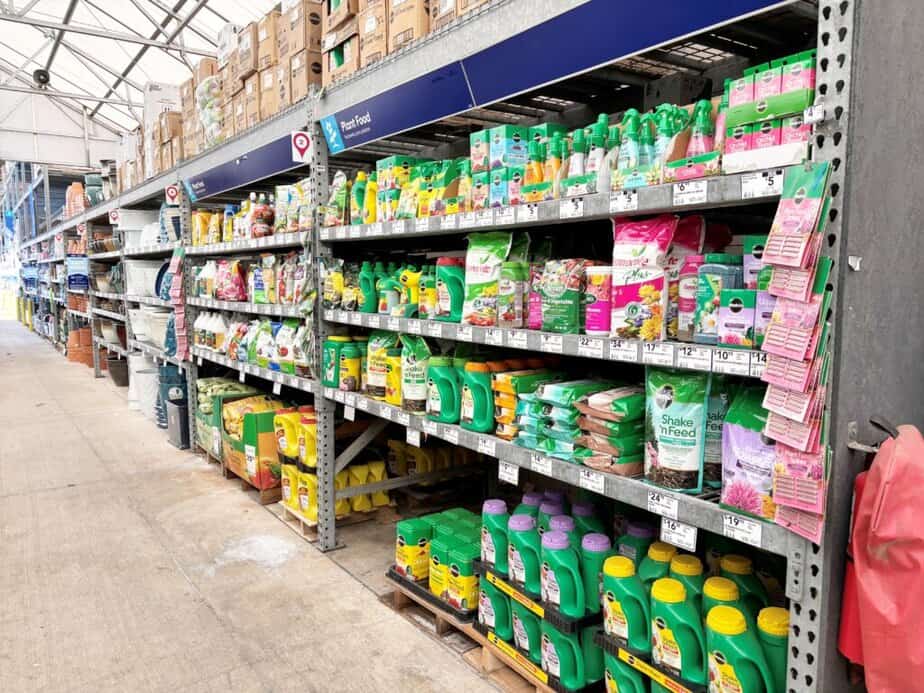
There are a lot of NEW products that come and go, but you don’t need to buy the biggest fad. Do what your soil test says and you will have gorgeous plants and save a ton of money with Gaye’s DIY Fertilizer Blend.
As Gaye says, “ You don’t need fancy products, you don’t need 75 bags of different stuff.
Save your money for more plants!”
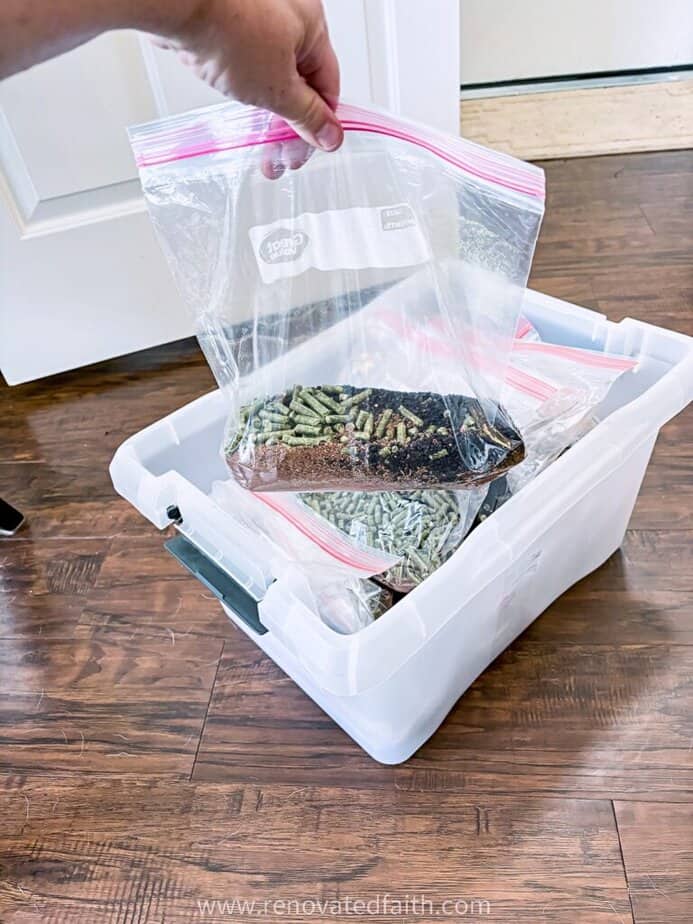
I had major surgery this summer, so I went ahead and did my fertilizer blending early, putting enough fertilizer for one plant in each Ziplock bag. I might do this again this winter so it’s less work for me in the spring when it’s time to prune and fertilize.
RENOVATE YOUR FAITH: How To Pray Big (And Have FULL Confidence in the Result)
Two verses on prayer that changed everything for me:
Ephesians 3:20: “Now to him who is able to do immeasurably more than all we ask or imagine, according to his power that is at work within us.” = PRAY BIG
1 John 5:14-15: “This is the confidence we have in approaching God: that if we ask anything according to his will, he hears us. And if we know that he hears us—whatever we ask—we know that we have what we asked of him.” = God grants all prayers aligned with His will
Here’s the truth: God invites us to pray BIG, but He also protects us from what we ask for that isn’t actually good for us.
He won’t give us too much of what we think is good when it would keep us from His absolute best. His plans are perfect, and He loves us too much to give us anything less—even if our hearts are set on it.
So pray CONFIDENTLY because you can take these truths to the bank!
When’s the last time you prayed BIG? I mean, really BIG?
What are your boldest prayers for your kids? Your spouse? Your work? Your ministry? Your friends?
I challenge you to pray the biggest prayers you can imagine.
And when we ask for too much of a “good thing”? He redirects us toward what’s truly best—not to stifle us, but to align our lives with His perfect plans.
Because his plans are the “best thing.” And that’s when we truly bloom. 🌱
Most of my projects include a corresponding devotional. For more spiritual encouragement, click here for the rest of my project posts that also include Renovate Your Faith devotionals.
More Posts Related to Gardening
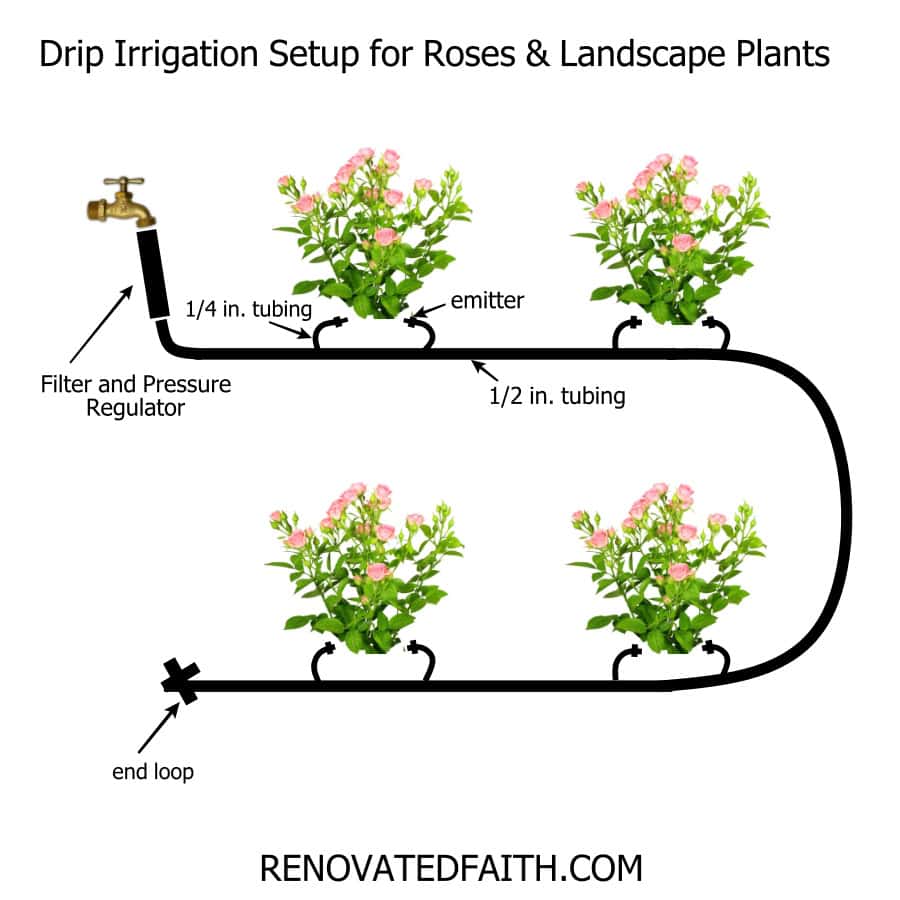
How to Set Up Drip Irrigation for Roses & Landscape Plants (Beginner Guide!)
How to Build a Mounded Flower Bed (Easy Step-By-Step Tutorial)
7 Top Metal Garden Trellis Ideas for Climbing Plants and Roses (Cheap & Easy to Install!)
My Best Front Yard Curb Appeal Tips (Free Landscaping Checklist!)
Plastic Stepping Stones that Look & Feel Like the Real Thing
Final Thoughts On Gaye Hammond’s Not-So-Secret Fertilizer Blend
Growing beautiful roses and flowering plants doesn’t have to drain your wallet or overwhelm you with complicated products. Gaye Hammond’s simple fertilizer blend proves that the best solutions are often the most straightforward ones. By investing in a soil test and mixing your own amendments twice a year, you’ll save money, improve your soil’s health, and enjoy thriving plants with abundant blooms. Skip the marketing gimmicks and put that extra cash toward what really matters—more plants for your garden!
I love to hear your thoughts and questions! Scroll down to leave a comment and I WILL reply! ❤️
Blessings,

Be sure to follow the fun here!
Email Subscription | Instagram | Pinterest | Facebook | Twitter


Karin Peters is a DIY expert and the creator of Renovated Faith. She is a furniture painter, a home design consultant, and a tenacious problem solver determined to help you transform your house into a home. With 17 years of experience with DIY home improvement, she researches and analyses professional processes to adapt them to be easy and cost-effective for DIYers. She then tests every project and product before it appears on the site in a detailed, step-by-step format. After attending Texas A&M University, she received her Master of Divinity with Biblical Languages at Southwestern Baptist Theology Seminary. Her passions unite in Renovated Faith, which shows readers how to create a home that serves them so they can pursue their God-given purposes. About Renovated Faith | Editorial Policy | Facebook | Twitter | LinkedIn
Thank you Karin. Will try the DIY blend for my roses.
Any suggestions to treat/ prevent witches broom on roses? I lost a few plants already.
Witches broom is RRD. You need to put a plastic bag over the plant and dig it up, seal it and put it on your curb. It can spread easily so you have to act decisively.
I love how you give God a shout out and encourage us to pray BIG. We sometimes look at that as though we are being selfish. It is just the opposite because God wants us to ask Him and He wants to bless us.
One thing I saw in the post above is that you could use paper bags to put your individual portions of fertilizer and then store them inside a plastic tote. You will likely save money and not add to the plastic problems in our land fills.
BTW I am not judging but merely giving a suggestion. I use ziplock bags a lot.
Have a blessed day.
Carol! Why didn’t I think of that?! Thank you so much for that suggestion. I knew there was probably a better way than lots of plastic storage bags so thank you!!!