
How to Find the Right Paint Color (That is Perfect for YOUR Home!)
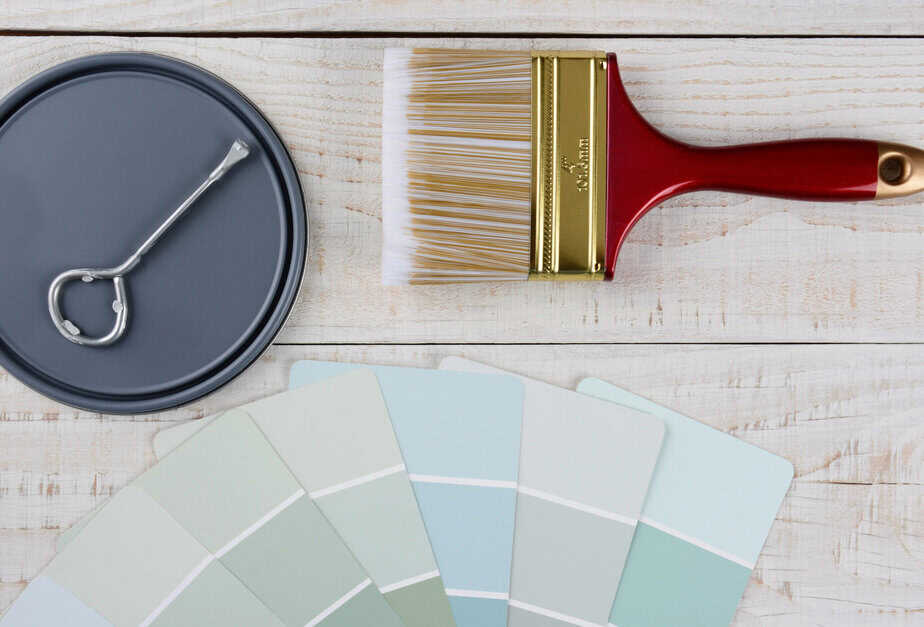
The Posterboard Trick For Picking The Right Paint Color
Wondering how to find the right paint color for a room? Transform any room with confidence using these expert tips that demystify color selection from start to finish.
Choosing the right paint color for your walls can be a challenging task. What seems like the perfect color on a sample in a big box store can look totally different in your home.
If you have had a hard time finding the right paint shade in the past, you are not alone. And all those cans of “Oops paint” at your local paint store will tell you it’s a common frustration.
Unfortunately, most homeowners make a common mistake that sabotages their paint color selection. However, this post will help you avoid that pitfall, allowing you to pick paint colors with confidence.
Lighting, surrounding décor, and even the time of day can completely alter the way a paint color appears once it’s finally on the wall, which is why relying on a tiny sample card under fluorescent store lighting so often leads to disappointment later.
A shade that felt warm and inviting in theory can suddenly appear too cold, too dark, or unexpectedly vibrant when paired with furniture, flooring, and natural light inside the home itself.
Fortunately, these proven tips will help you find the perfect paint color every single time! This process ensures that you will find a color you truly love, not just one that’s good enough to live with. Because why settle when you don’t have to!?! ( And don’t forget to see my favorite go-to paint colors at the end of this post.)

(As an Amazon affiliate, I earn from qualifying purchases. Please see my full disclosure HERE).
One of the main values of Renovated Faith is the importance of doing the right prep work to ensure you don’t spend more money or time on a project than you need to. “An ounce of prevention is worth a pound of cure.”
By taking a couple of simple steps to choose the right color, you’ll save money, time, and the frustrating experience of having to return to the home improvement store for more cans of paint.
Do you want to match paint to touch up a wall? Check out this post: How to Match Wall Paint for Touch-Ups (When You Don’t Know The Color)

Supplies Needed: How to Find the Right Paint Color
A Paint Sample Fan Deck (Optional) – Sherwin-Williams Colors or Benjamin Moore Colors I prefer Sherwin-Williams, but either will work. Not buying Sherwin-Williams paint? No worries. Paint stores and big box stores have the Sherwin-Williams and Benjamin Moore color codes in their computer systems. This allows you to get their exact shade, but in any paint you want.
Paint Samples – You have two good options ffor getting paint samples. You can buy the Sampalize stick-on samples, or I usually just get a few sample containers of paint at your local Home Depot. Don’t be afraid to get several options.
Posterboard – Get a few pieces of posterboard to display your color choices on your walls.
Painter’s Tape – You’ll need something to attach the posterboard to your walls so cut and loop pieces of painter’s tape under the posterboard. You can use any leftover for painting the room.
Easy Step-By-Step Guide for Picking the Right Paint Color
Step 1: Find Your Undertone
If you are new to selecting paint colors, don’t let the word “undertone” scare you off. It’s a fancy way of saying what “color ballpark” you want to focus on.
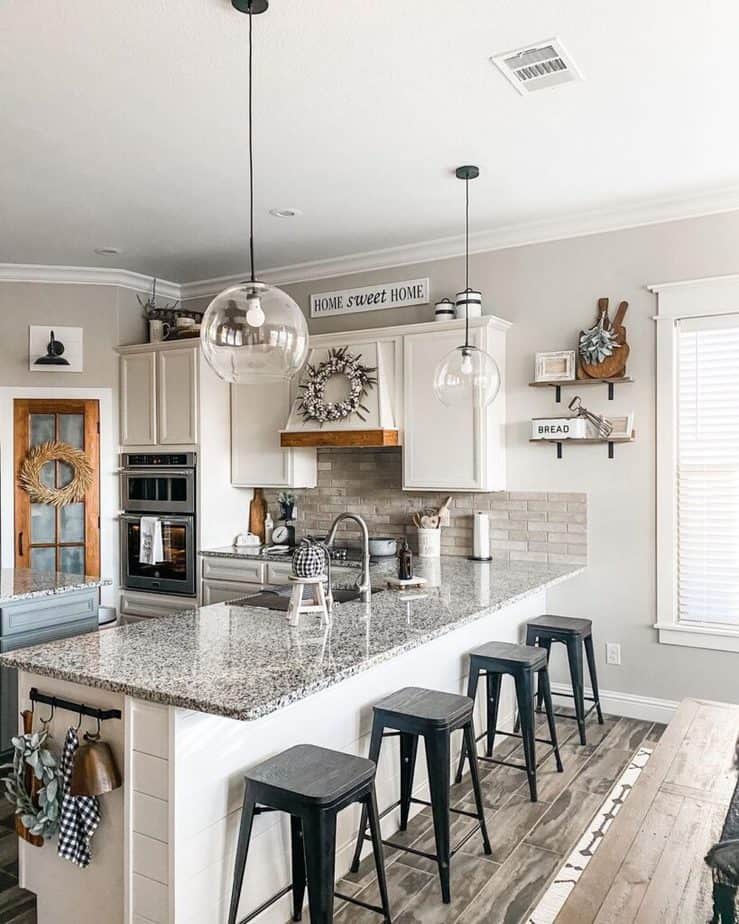
First, find an inspiration image of how you want your room to look, whether that’s an image of your friend’s room, an Instagram image or a Pinterest pin.
If you already know the name of the color in the image, keep your options open because that same exact shade might look COMPLETELY different in your home. Our goal is to achieve the same look in your inspiration image, even if that is a slightly different shade than what is actually painted on the wall in the picture.
Use your paint fan deck to help to determine what color grouping best fits the inspiration image. Examples are cool grays, warm beiges or warm whites. Use your paint deck to find a few pages that best match that color.
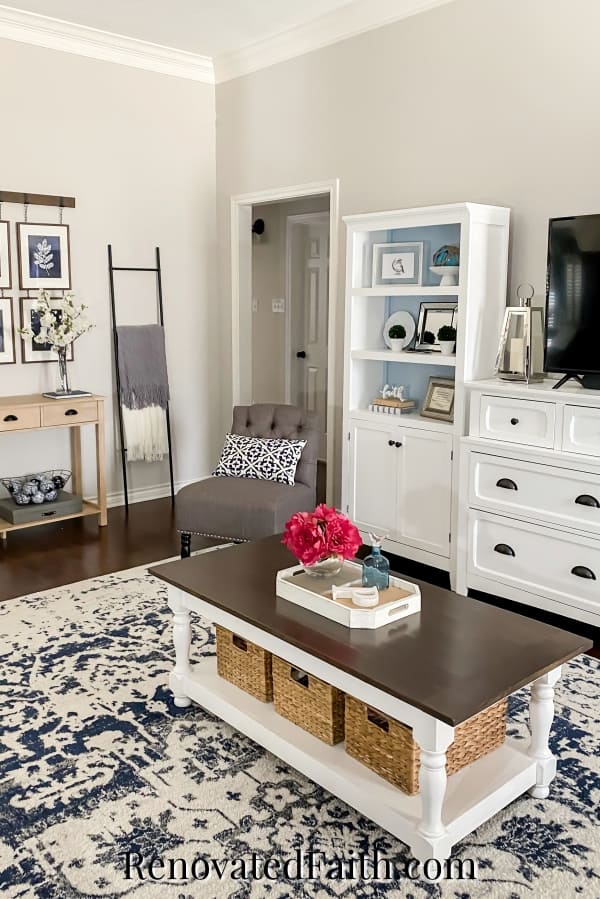
Lets say if the above image is your inspiration pic, then you’ll want to focus on neutral beiges like below.
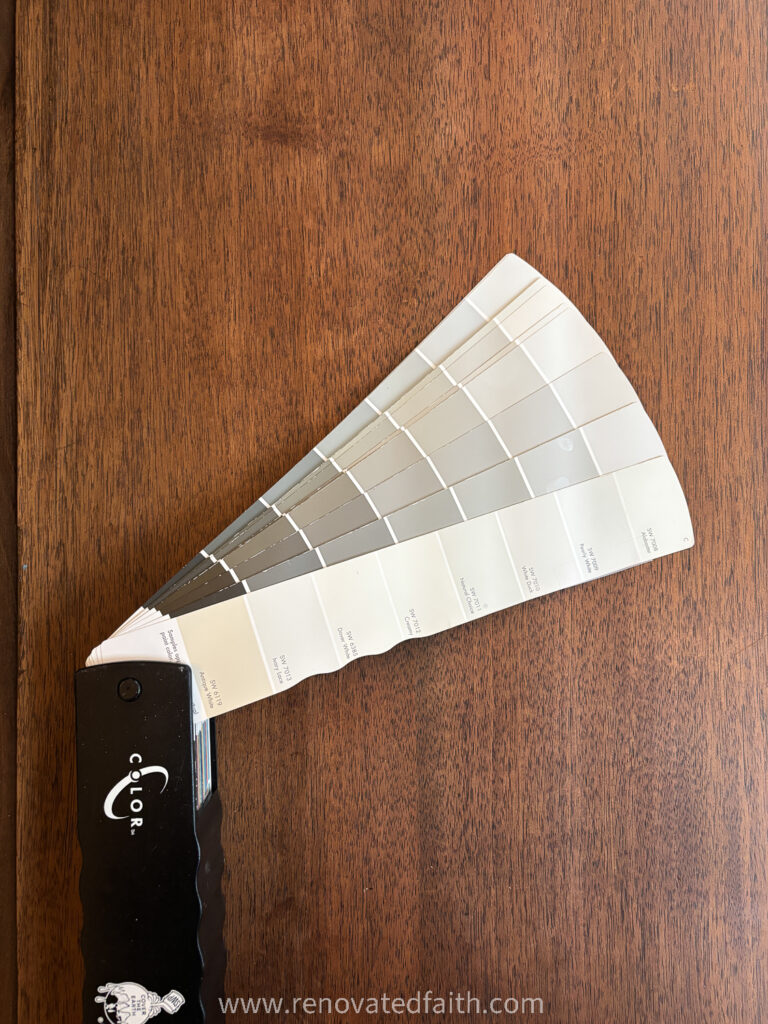
Now that you know your color group, pick 5 or 6 of those to get paint sample containers of.
Pro Tip: If you find yourself deciding between a brighter shade or something a little more subdued with the same undertone, go with the lighter, toned-down version. Sometimes what seems like the perfect color on a tiny paint sample can be bright and overwhelming when you have an entire wall covered in that paint color.
Step 2: Get Your Paint Samples
I like to get paint samples at my local Home Depot. Be sure to bring your fan deck with you to the paint counter. Tell them which shades you want paint samples in and that it should be interior paint. I like to get several shades to give myself options. They might ask what sheen you want. If so, tell them satin or eggshell.
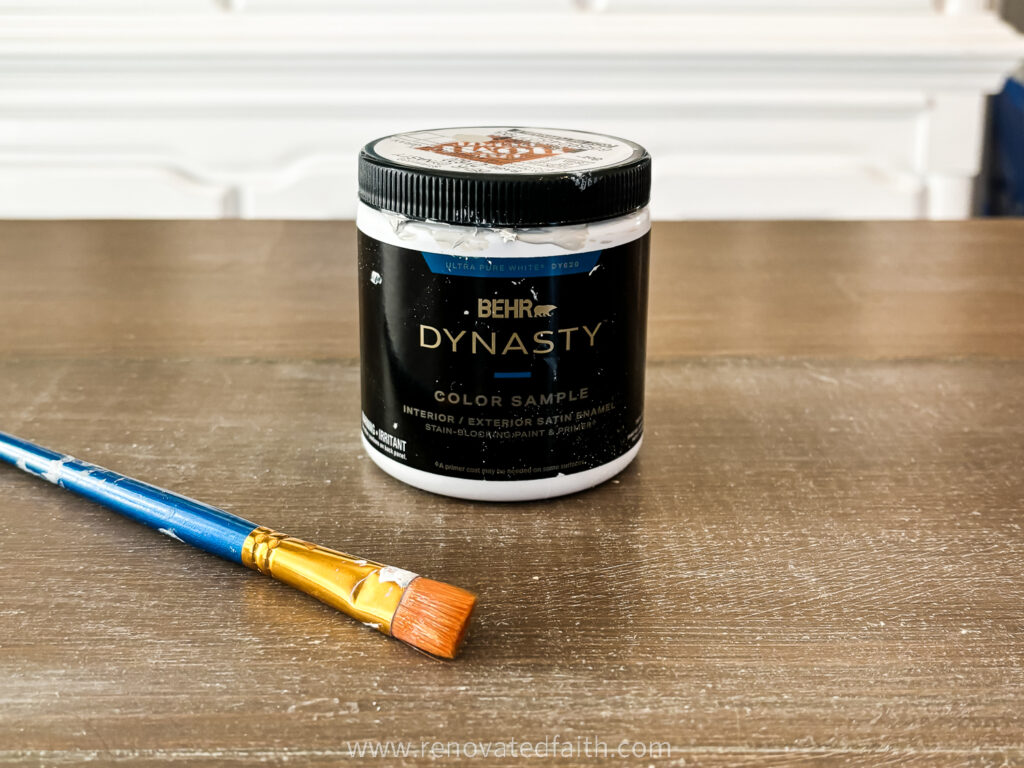
They will prepare your paint samples, and when they are done, they will dry a drip of paint on the top of the sample container with a hair dryer.

Before you leave the paint counter, make sure those samples match your fan deck exactly. Even computers make mistakes sometimes. If this happens, they will be happy to mix another paint sample container for free.
Step 3: The Posterboard Trick for Choosing a Paint Color
Finding a paint color you love and finding one that you feel you can live with are two totally different things. Fortunately, the posterboard trick will go a long way in helping you find the right paint.
RELATED: How To Create a Home That Serves You (Instead of You Serving It!)
Next paint squares of your paint color onto the piece of posterboard so there is a least two inches of white around each paint square. If you got the Samplize stick on samples, you can just stick them on.
Let the first coat dry, and paint a second coat onto your sample squares in order to achieve full saturation of the color. Loop pieces of painter’s tape underneath to stick them to your wall. Don’t be afraid to make several poster boards of one color to stick on different walls around your home.
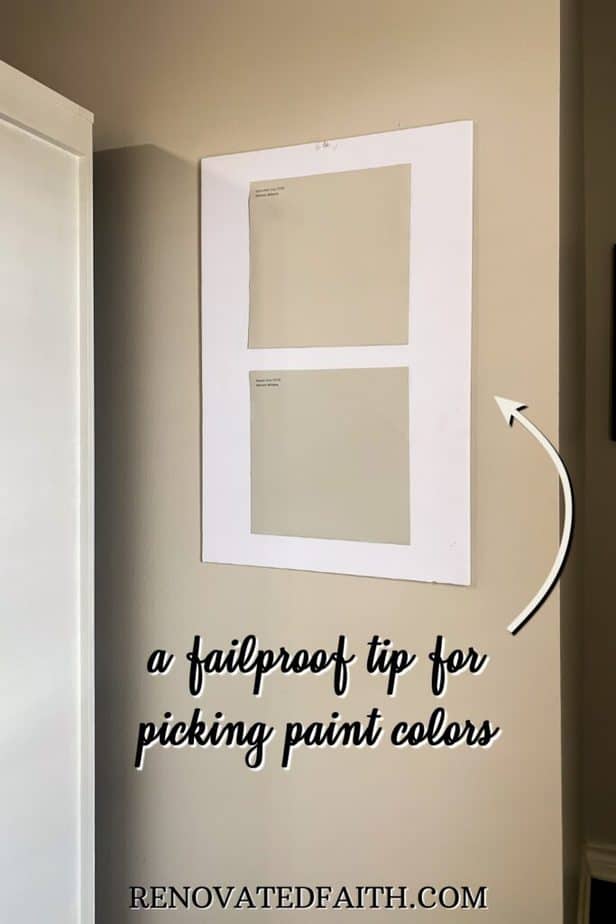
Oftentimes, I see homeowners paint the sample directly on their old wall color. But this is a recipe for disaster.
Doing this makes it really difficult to see a true comparison of what the new samples would look like. That’s because the old paint is influencing the look of your new paint sample on the wall.
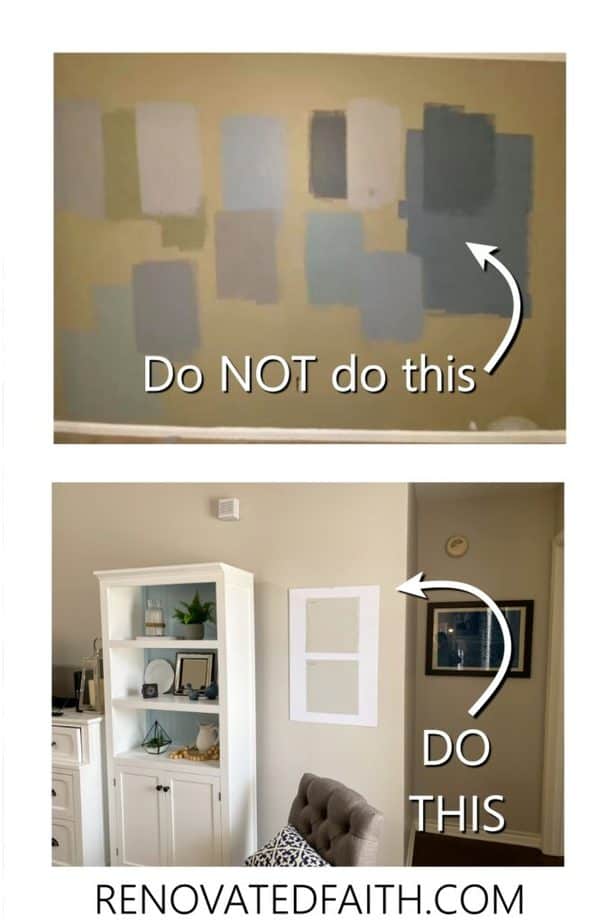
For example, if you put an Agreeable Grey paint sample on the wall of a room that is already a yellow beige, then Agreeable Gray is going to look very gray because the yellow undertones will trick your eye into thinking AG is cooler than it really is. I’ve seen the same with light and dark colors.
That’s why we are using white posterboard, so your brain compares the paint on your sample to pure white. This way, it’s not easily swayed by the color already on the wall.
The white border around the sample acts as a boundary for your eye to better anchor itself back to pure white.
Pro Tip: You can also use a project board (like for science fair projects) to bend around a corner and then stick the paint sample over it. This allows you to see and compare how the sample looks in your house from two different light sources at once!
Step 4: Live With Your Paint Posterboards For 24 Hours
Then, live with them for a day or even a couple of days to see how they are affected by the natural and artificial lighting throughout the day.

Wall colors can look completely different depending on the time of day. Morning light will make your walls look cooler, and evening light will make your walls look warmer. This is one of the main reasons a paint color can look totally different in one home versus another. It’s a phenomenon known as metemorism, which is why it is so important to compare paint colors in the actual room at different times of day and under the room’s artificial light.
The photo below is a great example of how the exact same paint shade can look different under different light exposures.
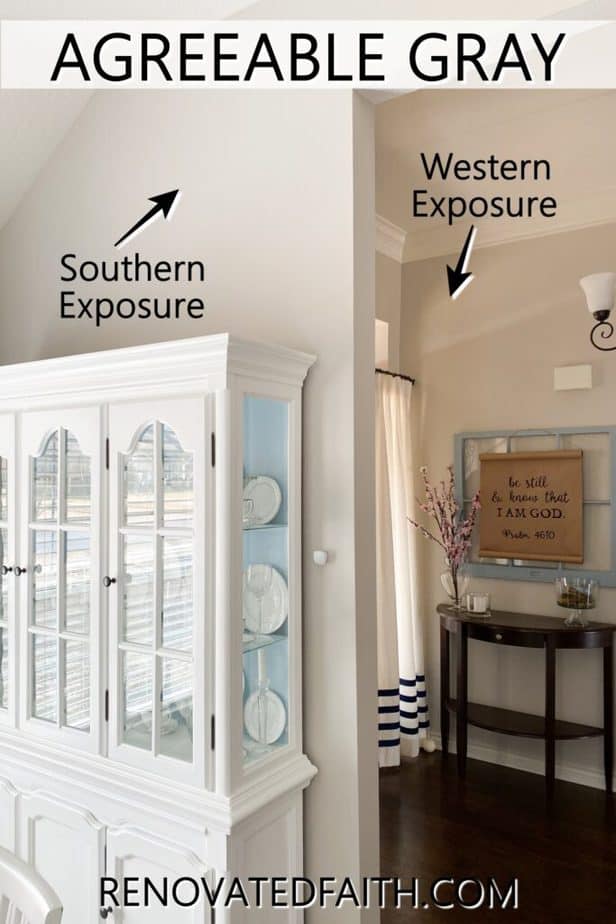
This photo was taken in the afternoon when the dining room is still getting southern exposure but the entryway going into the living room is getting western exposure.
When picking a paint color, I often have several sample posterboards up on my walls to help me determine what works best.
Living with these posterboards on your walls is the best way to understand how a shade looks in your actual room without having to paint it on the wall itself.
And don’t forget to refer back to your inspiration pic when needed!
Step 5: Decide On A Final Shade
Now that you have spent some time living with these shades, you can pick your final paint color!
Think about how much more confident you will before you start painting. You will already know exactly how your shade looks on the walls you’ll be painting.
My Favorite Home Paint Colors
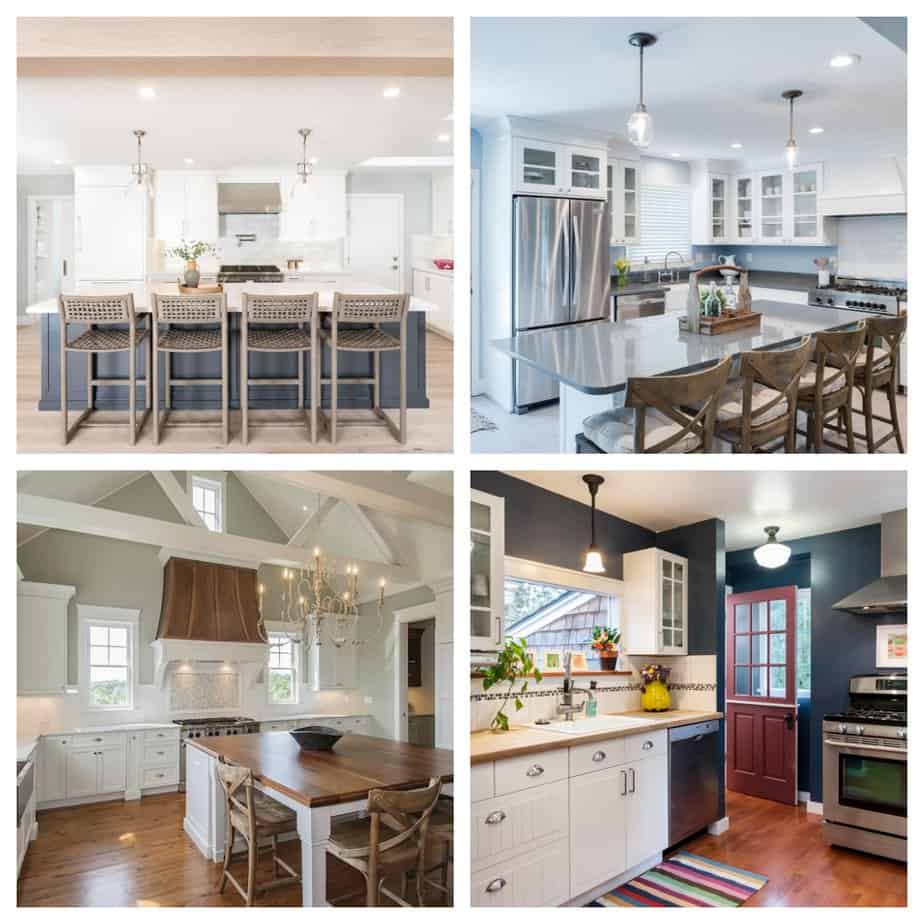
Some colors work universally well in homes because of their balanced undertones and ability to coordinate well with other decor colors. I’ve found these colors work really well in my own home, and you can see how they do in other real life homes below:
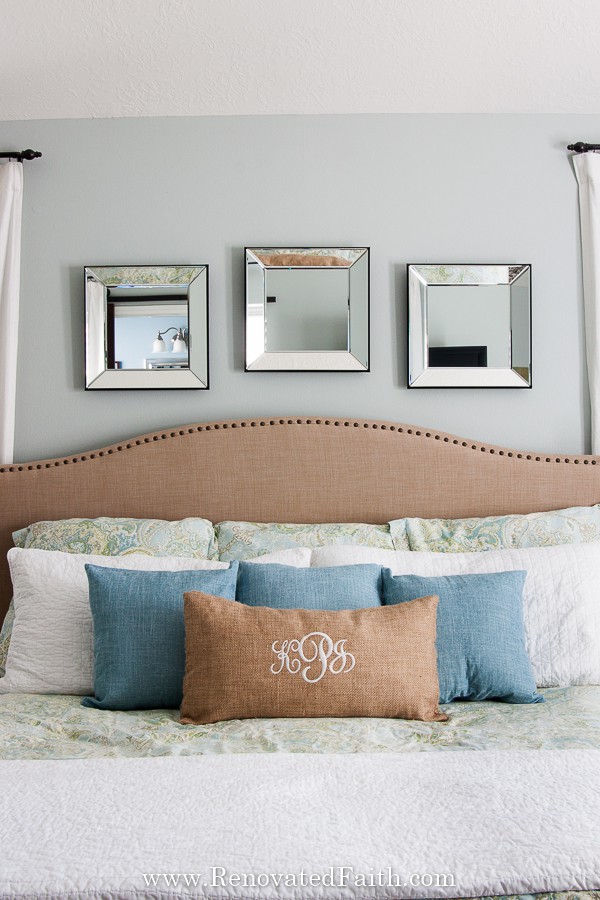
Sherwin-Williams Agreeable Gray (My Favorite Living Room and Whole-House Color)
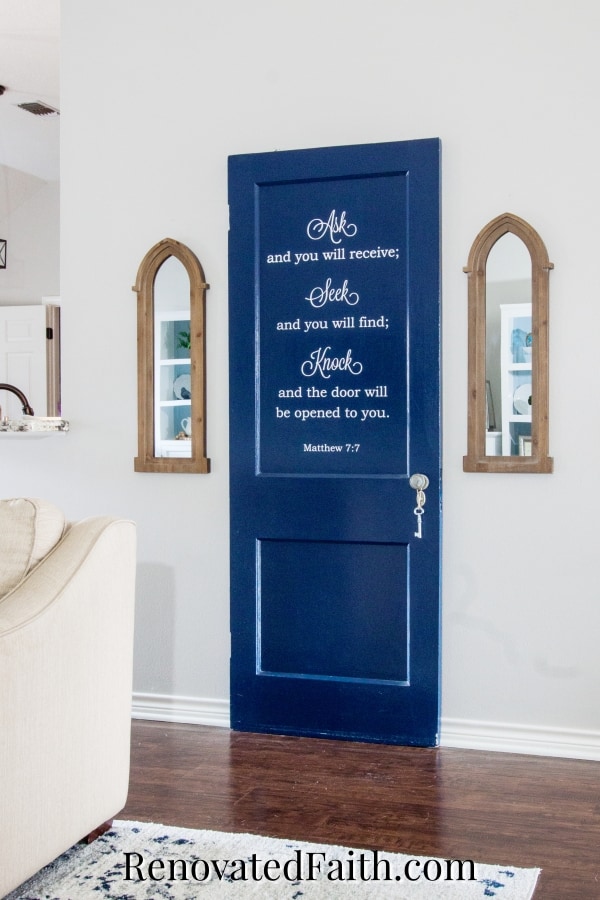
Benjamin Moore Hale Navy (A Fool-Proof Navy)
Sherwin Williams Silver Strand (My Favorite Shade for a Relaxing Space)
25 Popular Kitchen Paint Colors for White Cabinets
How to Touch Up A Wall (When You Don’t Know the Paint Color!)
RENOVATE YOUR FAITH: Why Developing a Habit of Prayer is Easier Than You Think
Just like finding the perfect paint color transforms a room, developing a consistent prayer habit can transform your entire life. But where do you even start when prayer feels overwhelming or your mind constantly wanders? If you’ve struggled to maintain a meaningful prayer practice, you’re not alone—and there’s hope. Discover practical, grace-filled strategies to build a prayer habit that actually sticks, even on your busiest days. Click here to learn how easy it is to develop a life-changing habit of prayer that will deepen your faith and bring peace to your daily routine.
Most of my projects include a corresponding devotional. For more spiritual encouragement, click here for the rest of my project posts that also include Renovate Your Faith devotionals.

Final Thoughts on Picking Paint Colors
Choosing the perfect paint color doesn’t have to be stressful or expensive. By using the posterboard trick and living with your samples for a day, you’ll make a confident decision on a wall color you’ll love for years to come. Taking the time upfront to test your colors properly means you won’t end up with buyer’s remorse—or another can of “oops paint” gathering dust in your garage. So grab those posterboards, trust the process, and get ready to transform your space with a color that’s truly perfect for your home!
I love to hear your thoughts and questions! Scroll down to leave a comment and I WILL reply! ❤️
Blessings,

Be sure to follow the fun here!
Email Subscription | Instagram | Pinterest | Facebook | Twitter


Karin Peters is a DIY expert and the creator of Renovated Faith. She is a furniture painter, a home design consultant, and a tenacious problem solver determined to help you transform your house into a home. With 17 years of experience with DIY home improvement, she researches and analyses professional processes to adapt them to be easy and cost-effective for DIYers. She then tests every project and product before it appears on the site in a detailed, step-by-step format. After attending Texas A&M University, she received her Master of Divinity with Biblical Languages at Southwestern Baptist Theology Seminary. Her passions unite in Renovated Faith, which shows readers how to create a home that serves them so they can pursue their God-given purposes. About Renovated Faith | Editorial Policy | Facebook | Twitter | LinkedIn
I’ve used the poster board tip for almost 20 years. Two additional tips that have helped me are to carefully write down the paint brand and color name on the bottom of the poster board before you paint your sample on, and to keep those sample poster boards folded in a tote or box or whatever works for you. Mine all go in a tote bag and when I finally had an opportunity to paint some bedrooms, I could easily revisit colors I’d already used and see of they worked well in a different space. And when one daughter asked if she could use some leftover paint she just looked through my painted samples until she found a color she liked.
Thank you so much for those great tips!