
Best Sander for Furniture Refinishing (Types & Picks)
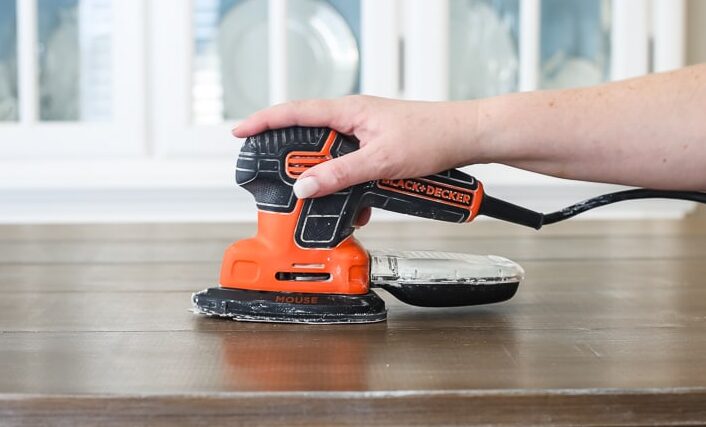
I tested 5 top sanders for furniture restoration to find the best one for cabinets, tables & detail work, plus my personal pick after real use.
Sanding has gotten a bad rap when it comes to furniture refinishing. But what many don’t realize is that the vast majority of furniture pieces need to be sanded, even ones that are chalk-painted.
But did you know that taking 5 minutes to sand your furniture piece with the right electric sander will ensure the finish is gorgeous and it lasts for years to come? And skipping this step could possibly mean you have to completely refinish the furniture piece.
As an Amazon affiliate, this post contains affiliate links and you can see the full disclosure here.
Quick Answer: The Best Sander for Furniture
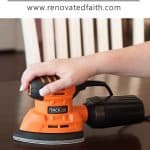
The best sander for furniture is the Black+Decker 1.2 Amp Detail Sander. I used it for my whole kitchen cabinet project, and its small head gets into grooves and trim without costing hundreds of dollars.
- Best overall: Black+Decker Detail Sander (1.2 Amp) – Use these foam sanding pads to get the feel of a Surfprep without the price tag.
- Best budget: WEN 6301 Mouse Sander
- Best cordless: Black+Decker BDCMS20
- Premium pick: SurfPrep Electric Ray, for people who sand furniture for income
An electric sander is an inexpensive way to sand furniture quickly, easily, and without a big mess. In this post, I’ll show you the best sander for your next project.
LET ME SHOW YOU:
- Why sanding is important but fast and easy with an electric sander
- The best furniture sander for you at an affordable price
- How to sand furniture in less than 5 minutes
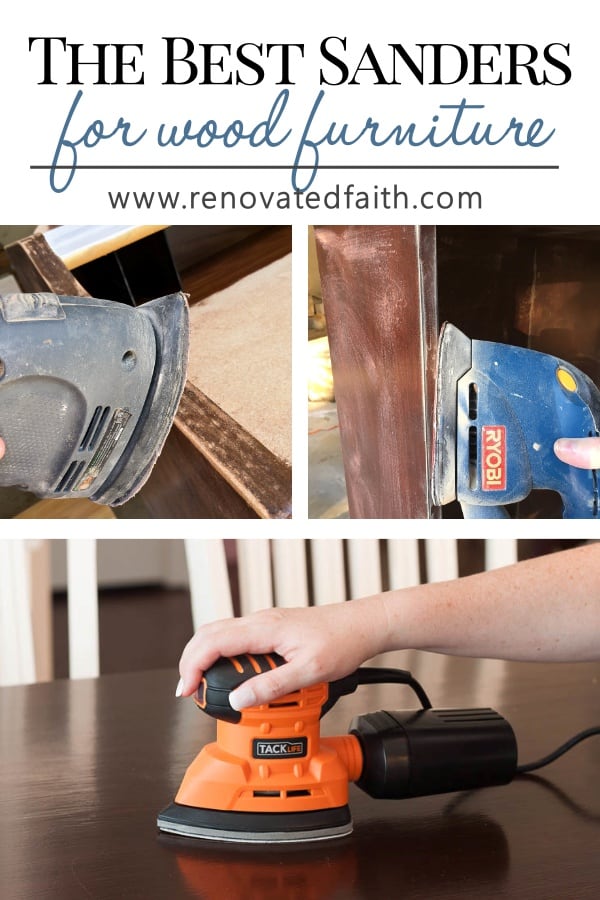
Why You Need a Sander for Refinishing Furniture
Whether you use chalk paint, latex, or any specialty furniture paint, there’s a good chance you will have to sand your furniture piece and an electric hand sander makes it so much easier than sanding by hand!
Related Post: The BEST Furniture Paint (24 Brands Blind-Tested & Reviewed)
Before we get started, know that sanding is not the big deal it’s made out to be!
Sanding wooden furniture only entails roughing up the surface of the wood so that new paint sticks.
You are not sanding off the old finish! In fact, if you are sanding furniture the right way, it shouldn’t take more than 5 minutes.
What Kind of Sander do You Use to Refinish Furniture?
There are a few different types of sanders but my favorite sander for refinishing furniture is a hand sander because you have more control in order to get a really smooth surface.
An electric hand sander (sometimes called a mouse sander) makes the process quick and painless and it is the best sander for furniture restoration.
When I bought my first sander, I was absolutely shocked at how easy it was to use. It took WAY less effort than sanding by hand and the dust bag collected most of the sanding dust. Also, you can use your electric sander on any type of furniture – painted, stain, raw wood and even laminate furniture.
What is the best way to sand wood furniture?
If you can iron a shirt, you already know how to use an electric sander. First, set the sander down with the grit pad attached to the velcro underneath (see the chart below on which grit level to use). The weight of the sander does most of the work for you. Just move it back and forth in a circular motion – just enough to take the sheen off of the furniture. You just want the wood surface roughed up enough so that the new paint grabs onto the old surface. When you have sanded the surface, the next step is to wipe the furniture piece down with a moist rag or clean cloth and you are ready for primer. See my full post on How To Sand Furniture In 5 Minutes HERE.
Considerations When Buying a Furniture Sander
Something to consider when buying a sander is how it feels in your hand. Are the tip and bottom plate surrounded by plastic or is it metal? Does it have a removable tip and is that tip likely to break? Does it have the detachable Velcro for easy removal of sanding pads? Does it use generic-size sanding pads? Does it have a dust catcher and how effective is it? I took all these things into consideration as I reviewed these sanders below to determine the best sanders for wood.
Which is the Best Palm Sander For Furniture? – Electric Sanders Buying Guide
Black+Decker Detail Sander, 1.2 Amp – The Overall Best Sander for Furniture Restoration
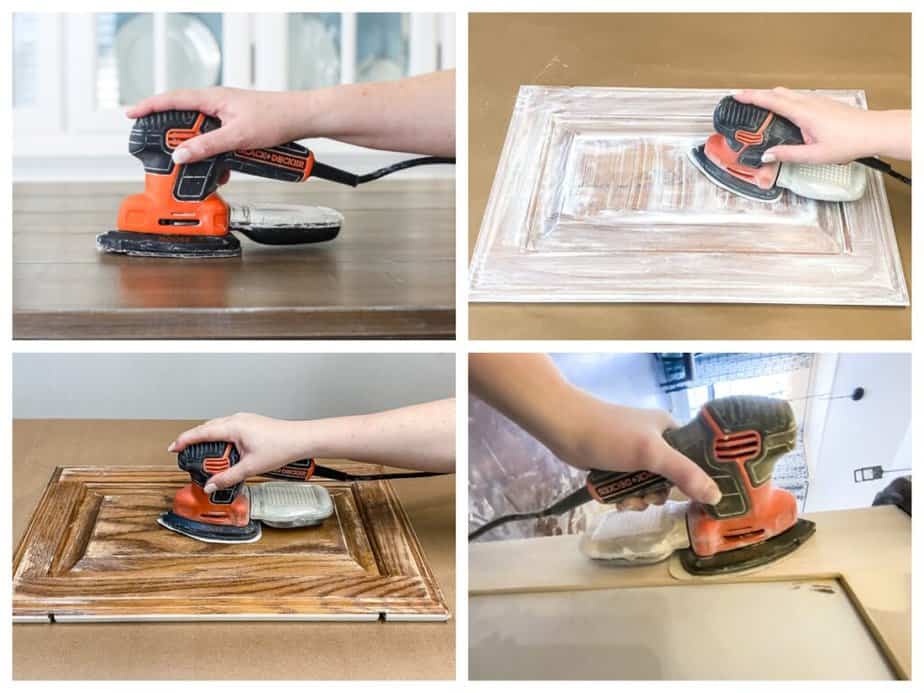
I used this same sander to refinish all of my kitchen cabinets (see the cabinet reveal here). I was impressed with its performance, durability and ease of use. This sander is a workhorse at a VERY reasonable price (CLICK HERE FOR THE CURRENT PRICE AND REVIEWS)
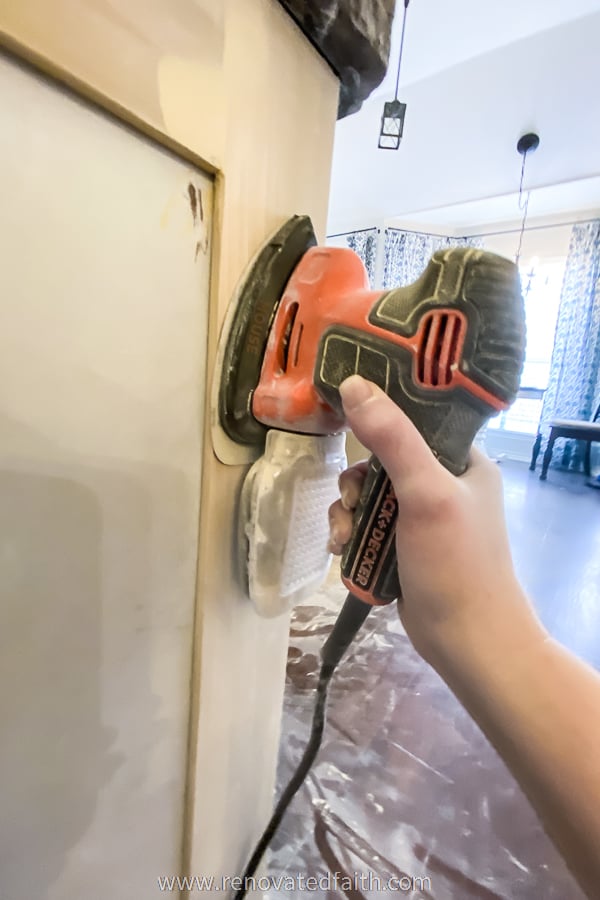
The head of this sander is slightly undersized so standard mouse sander pads are a little bit big. It’s compact design has a huge advantage when it came to sanding in the grooves of the cabinet door trim.
Because the sanding pad wrapped around the edge somewhat, it gave me so much for flexibility for sanding detail areas and tight spaces without paying hundreds of dollars for a Surfprep sander.
This mouse sander has a compact size and ergonomic stability for easy sanding but also offers some other important features. With a high-performance micro-filtration dust collection system, you don’t have to attach it to your vacuum or shop vac.
The Black+Decker BDEMS600 has a convenient 3-positional tip for versatility depending on the furniture project you are sanding. It has a detail finger attachment for getting in small spaces but some reviewers said this attachment broke off after several uses.
This sander is unique in that it has a trigger switch instead of a toggle switch and features different speeds and a high quality powerful motor.
REPLACEMENT PARTS – Since first writing this article, Black and Decker has come out with replacement parts to keep your sander humming for years to come. They are easy to install and low-cost on Amazon:
WEN 6301 Mouse Sander (The Best Mouse Sander for Furniture – Low-Budget Pick!)

This is the best low-cost finishing sander for cabinets and furniture because it’s durable and you have plenty of control for sanding detail work.
The WEN 6301 allows for easy sanding to get a very smooth finish on your latest DIY project as it’s small size and ergonomic handle is great for sanding fine details. The one amp motor ensures even sanding while the suction adaptor allows for vacuum attachment. Like other sanders, it has a hook and loop base for each attachment of sandpaper pads.
Reviewers say this sander is sturdy and well-built even considering the price. They also state that it comes with a dust collection bag if you don’t want to attach the sander to your vacuum cleaner.
A few reviewers state that the tip of the sander is somewhat delicate so one should be careful to always keep it level. It might not be the best choice for a large cabinet project but would be a good option for furniture. Check the current price and read reviews HERE.
Black+Decker BDCMS20 Cordless Sander (The Best Cordless Sander for Furniture)

 The BDCMS20 gives you the same convenience as the last model but without the power cord. It also has an ergonomic design that gets in tight corners. The detail finger attachment can be easily interchanged to make sanding smaller spaces even easier.
One complaint was that it was somewhat heavy but that is going to be the case with all cordless sanders. However, for that reason, it is probably the best sander for sanding stained wood to restain because the extra weight will work in your favor.
It comes with a battery as its power source, charger, and dust collector for easy clean-up. It has plenty of power and long battery life for your furniture project. If you are concerned about whether it can work for long periods of time, one reviewer remarked that she used it for all of her kitchen cabinets while only having to stop and recharge once. I found that pretty amazing considering the scope of that project.
It has a dust-sealed switch and a high speed motor making it a good choice and great value for any project. Check the current price and read reviews HERE.
SKIL 7302-02 Octo Detail Sander

This power sander offers pressure control which helps maintain a more even finish. It even includes 8 detail sanding attachments to access tough-to-reach corners making it the best detail sander.
The SKIL Octo has a clear-view dust canister which allows you to see how much dust has been collected, removing the guesswork for when to empty the container.
The microfiltration helps to capture smaller dust particles you might not normally catch. The price and size make this a good sander but some reviews complained about the functionality of the attachments. However, its versatility, ergonomic design, and filtration system make this sander a great tool for the price although it doesn’t have variable speed control. Check the current price and read reviews HERE.
SurfPrep Electric Ray 3×4″ Sander
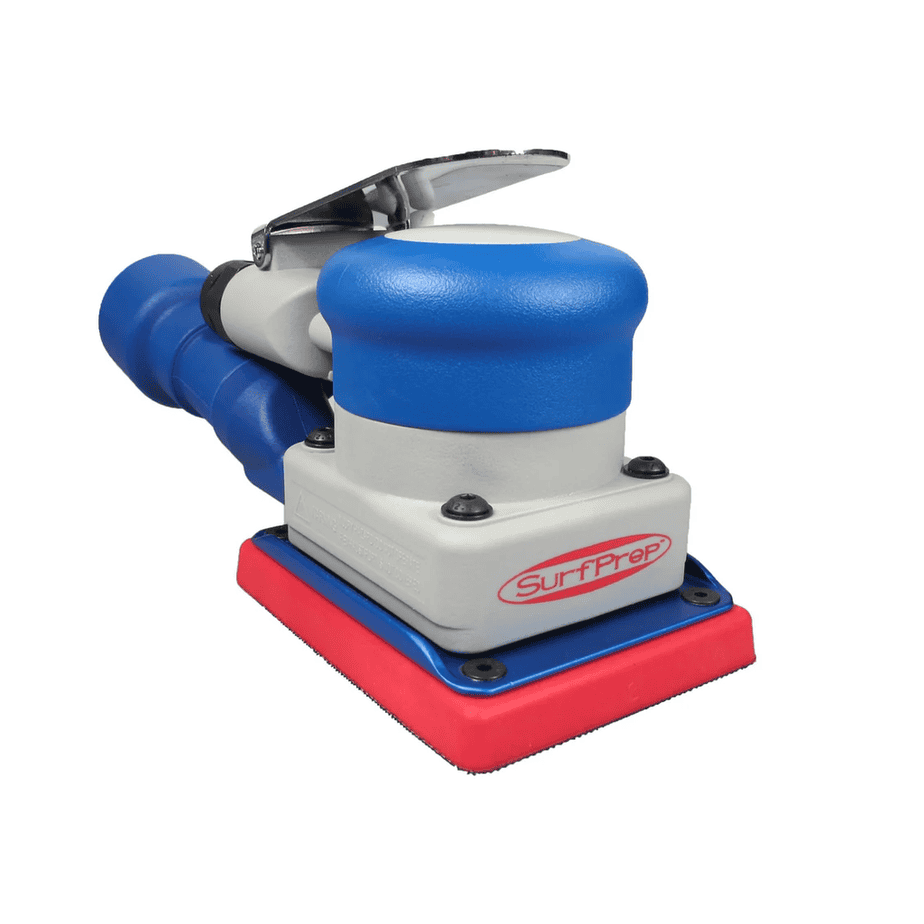
The surfprep sander is a high end furniture sander that is great for professionals that are flipping furniture for profit. And while the Surfprep sander is great, don’t feel like you have to shell out hundreds of dollars for a good sander.
The pad is 3″ x 4″, about the size of a mouse sander but it works with foam interface pads, so it can follow curves, spindles, and trim instead of flattening them. This makes it ideal for detailed furniture pieces. The Surfprep also connects to a shop vac, which cuts down dust. Also, it weighs about 2.5 lbs, which is light for a sander in this class.
The trade-off: It costs several times what the sanders above cost. Sandpaper doesn’t fit it either. Also, you have to buy SurfPrep’s own foam pads and abrasives, so the ongoing cost is also greater than a mouse sander where any generic sanding pads will do.
Who should skip it: If you sand one or two pieces a year or are just starting out your furniture business, my top pick above does the job for a fraction of the price. See below for some tips to get the same benefits of the Surfprep without the high cost.
Where to buy: Surfprep Sander
Do You Actually Need a SurfPrep Sander?
Each time I write about sanders, someone asks me about the Surfprep sander. If you spend any time in furniture-flipping groups or forums, you’ll hear pros raving about it. In this section, I’ll walk you through who it is actually for, so you can decide whether the price makes sense for you.
The Catch: The Cost
One dealer lists the 5-inch SurfPrep Electric Ray at around $578, and one competitor’s review puts the 3×4 version above the price of a $299 Festool. The sander I recommend above costs a small fraction of that.
The Surfprep also doesn’t take regular sandpaper and you have to buy the Surfprep foam pads and abrasives, so the costs keep adding up.
Who Should Buy a SurfPrep Sander
If makes sense to buy a Surfprep if you refinish furniture for income and are sanding every week. It’s also helpful with detail work.
Why You Don’t Need a Surfprep Sander
If you are a DIYer or are just starting out a furniture business, I have some tips for getting the same benefits of a Surfprep but for a fraction of the clost.
For most DIYers, a $30 to $60 sander and good sandpaper does the job. And yes, the Surfprep sander is tempting but you can add some of the same features to the Black and Decker sander I mention above.
The Black and Decker Sander has a dust collection catcher that greatly minimizes dust in your workspace. This might not work as well as the Surfprep’s vacuum attachment but is still and effective and you don’t have the roar of a Shop vac in the bacground.
The Surfprep is known for it’s foam sadding pads which are great for sanding detailed molding and reaching into crevices. But guess what! You can buy foam sanding pads to fit your Black and Decker sander and have the same ability to sand inner curves on detailed molding like you can with the Surfprep sander.
The foam sanding pads attach with hook-and-loop just like regular sanding pads, so there’s nothing new to learn. The foam has just the right amount of give to curve into hard-to-sand spaces, but it’s still supportive enough to sand them evenly. That balance is what keeps you from rounding over edges or leaving uneven spots on detailed pieces.
Here is my favorite foam pad for your Black and Decker sander: Form Sanding Pad
With my Black and Decker sander and the addition of the foam sanding pads, I feel like I have the same control as the Surfprep sander but I’m paying less than $50 instead of hundreds of dollars. The Black and Decker detail sander also has a detail finger attachment for accessing hard-to-reach areas that the Surfprep does not.
The Overall Best Mouse Sander for Furniture Restoration
The Black and Decker 1.2 Amp Detail Sander has more than enough features to sand and refinish even the most detailed furniture projects. The grip placement allows for comfortable and even sanding of furniture surfaces because of the weight distribution.
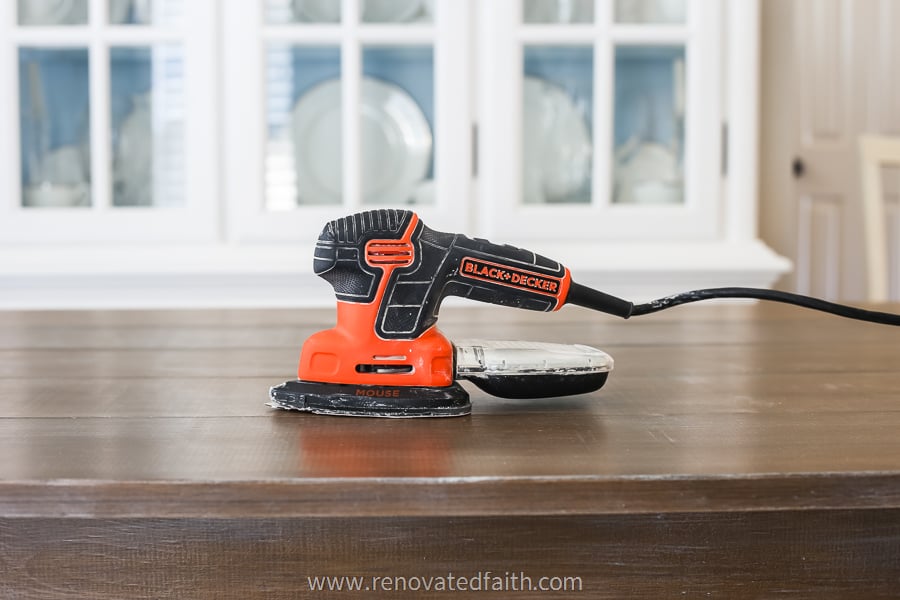
Unlike some of the hand sanders in its class, it does not offer a removable tip for detail areas but I find this is a plus because these tips oftentimes break off easily. Also, the standard tip is angled enough to get into small spaces on its own.
I would also say this is the best sander for doors or any other project you might want to tackle indoors. There will still be some dust but not a lot.
You can check reviews and see the current price for this sander here.
My favorite feature is that you can add any foam sanding pad to get the same feel of a Surfprep without the high price tag. See my favorite sanding pad here: Foam Sanding Pad
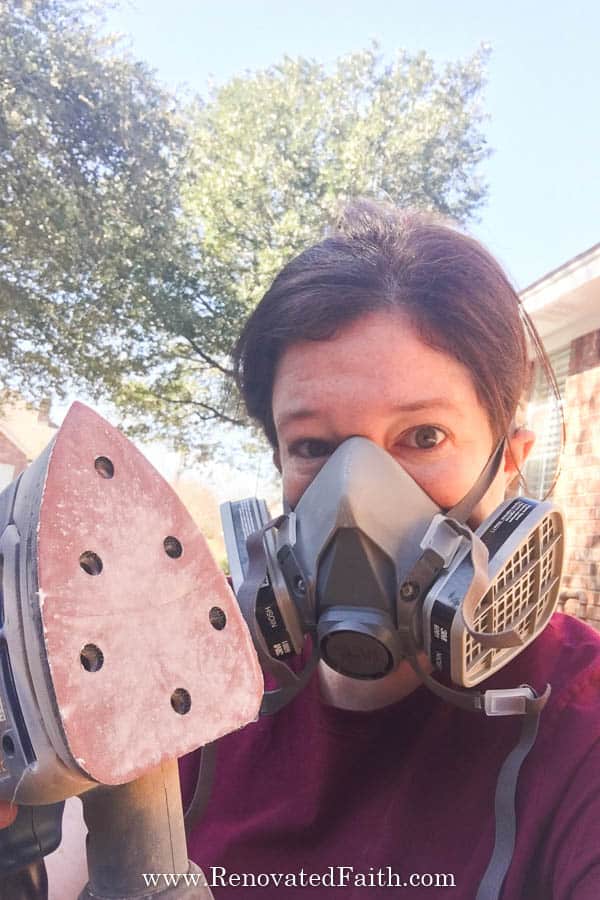
If you are doing some serious sanding and know you will also be around paint fumes, you might want to get a mask like the one that I have on below. For regular sanding, all you really need is one of these.
Related: The Ultimate Guide to Refinishing Furniture (The ONLY Tutorial You’ll Ever Need!)
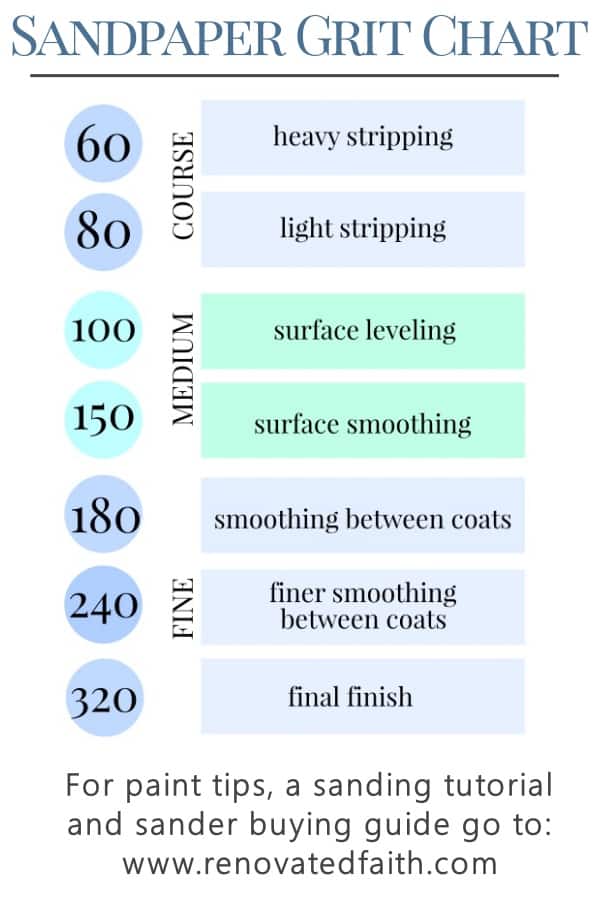
I’ve included this handy wood sandpaper grit chart to help you buy the correct grit or coarseness of sandpaper for your project. You can see the best option for sandpaper HERE.
How to Sand Furniture Grooves and Trim (Best Sander for Detail Work)
When sanding furniture grooves, there are going to be times you need to get into edgesof trim and that’s challenging with a typical detail sander. This is the point when many furniture painters will recommend an expensive Surfprep sander.
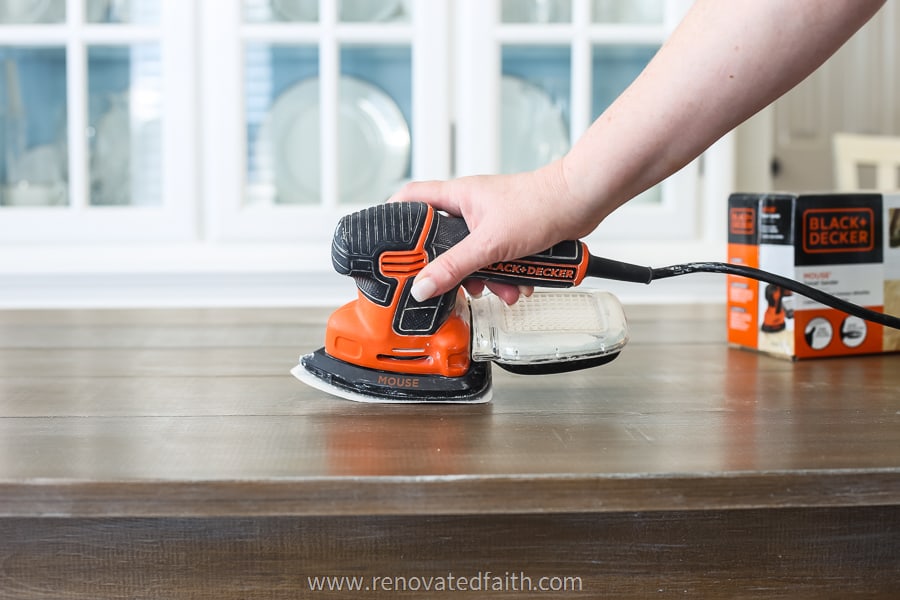
HOWEVER, my top pick, the Black and Decker Detail Sander has a slightly smaller sanding head. This means that standard sanding pads are a little big and the sanding paper wraps around the edge of the sander head making it easy to get into grooves and wood details.
Also, the addition of the foam sanding pad gives even more flexibility with sanding furniture grooves because it gets into those detail area easier – Foam Sanding Pads
So, the best flexible sander for furniture is the Black and Decker sander that you can get for a fraction of the price of the Surfprep. Click here for the CURRENT PRICE OF THE BLACK AND DECKER SANDER.
The Best Sander for Table Tops
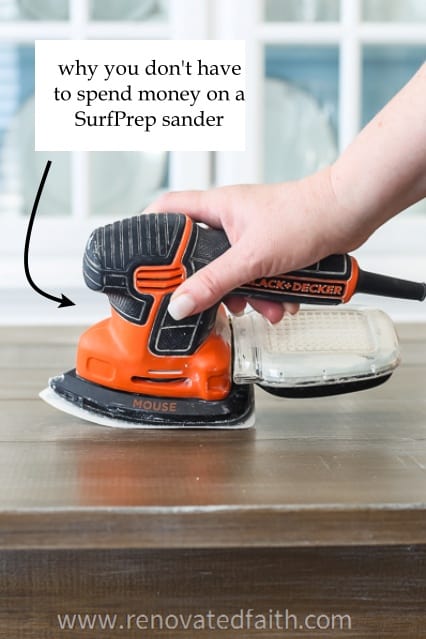
There are several kinds of sanders that all work well on furniture projects. I like to use a mouse sander for furniture but if you need to sand large rough surfaces, you should try a belt sander on furniture.
Belt sanders make great table sanders because they cover a lot of area in a short amount of time.
Another type of sander that is more heavy-duty than a detail sander is a random orbital sander. Because of the rotating motion of the disc, one of the best uses for an orbital finishing sander is evening out rough flat pieces of wood. Disc sanders are, however, not a good fit for small areas and tight spaces.
It has a rotating sanding disk and therefore does a little more of the work for you. I don’t love random orbit sanders for detail work but they are great for large areas.
What is the Best Sander with a Vacuum Attachment?
The WEN 6301 Electric Detailing Sander is a strong second best pick because. unlike the Black+Decker sander, it has a vacuum attachment. To significantly cut down on sanding dust, you can attach a Shop vac to the Wen Sander. This makes clean-up so much easier and less dust in the air to breath in. Even with the vacuum attachment, be sure to wear a mask.
FAQ’s on The Best Sander for Furniture Flipping
There are several sander options for refinishing furniture including a mouse or detail sander, a belt sander or an orbital sander. A mouse sander can do all the sanding that is required for a furniture piece including smoothing out a table top or detail sanding (especially when you use a foam sanding pad.) While an orbital sander is great for table tops, it’s not as versatile as the mouse sander.
A mouse sander is a great tool to have on hand because it makes sanding any project so much faster and you get better results than just sanding by hand. You can use it on furniture, cabinets, wood trim or any other project in your home. A mouse sander is a beginner-friendly essential and makes DIY projects so much easier while giving you professional results.
If you are in the business of furniture refinishing, completely multiple pieces of furniture a week, then a Surfprep might be a worthwhile expense with high-volume sanding. But if you are a DIYer or just getting your furniture refinishing business started, you can’t go wrong with the Black+Decker sander. Unfortunately, it doesn’t have a vacuum attachment like the Surfprep but it does come with a dust collection canister and a crevice attachment for sanding hard-to-reach places. Use this foam sanding pad on your Black+Decker sander to get the same feel of the Surfprep on details without spending hundreds of dollars.
Sanding is always a good insurance policy when painting furniture and it goes so much faster with using a mouse sander. Keep in mind that you don’t want to sand off the existing surface. The purpose of sanding is simply to scuff up the existing finish so the paint can grab onto it better. A quick sanding will ensure your paint adheres well and you have a beautiful finish for years to come. It’s better to spend a few extra minutes of sanding rather than risk your paint peeling. That would mean removing the peeling paint and refinishing the furniture piece all over again.
If you need to fill holes or gouges use a putty knife to fill the hole with wood filler. You can read all about how to fill in furniture damage including small cracks and holes here: How to Fix Damaged Furniture.
All the sanders mentioned above are great for removing paint from wood as long as you use a course sanding pad. Just remember that 9 times out of 10, you don’t have to strip the old furniture surface. Just lightly sand to rough up the old paint or stain and then add paint or a faux stain: A Beginner’s Guide to Furniture Painting | How to Faux Stain With Latex Paint
Whether you use an electric sander or sand by hand, you want to use the correct grit for your project. This sandpaper grit chart below goes into detail about which grit is best for what kind of surface. The rougher sandpaper is to be used on rougher surfaces and the smoother sandpaper is for smoother surfaces. I usually use a 100 grit sandpaper for leveling surfaces before painting or for scuffing up the surface. Then between coats I use a 240. I usually don’t sand after the last coat but if you do, use a very high grit sand paper and sand very lightly so as not to scratch the surface.
A palm sander has a square or round pad and is meant for flat surfaces like tabletops, dresser tops, drawer fronts, and cabinet doors. The term usually covers two tools. A quarter-sheet sander has a square pad and takes a quarter of a standard sheet of sandpaper, which you can cut yourself, so it’s cheap to run. A mouse sander is a small detail sander with a pointed, iron-shaped pad. The tip reaches into corners, along raised panel edges, around spindles, and into carved or curved areas a square or round pad can’t get to. Many come with a finger attachment for very tight spots. The tradeoff is that it’s low-powered and slow, and its pointed pads are proprietary hook-and-loop shapes that cost more per sheet.
| Grit | Type | Best For |
|---|---|---|
| 60 | Coarse | Heavy stripping |
| 80 | Coarse | Light stripping |
| 100 | Medium | Surface leveling |
| 150 | Medium | Surface smoothing |
| 180 | Fine | Smoothing between coats |
| 240 | Fine | Finer smoothing between coats |
| 320 | Fine | Final finish |
⚠️ Safety First: Lead Paint on Older Furniture
If your piece was made before 1978, the paint may contain lead. Sanding turns that paint into fine dust that’s easy to breathe in or track around your home, and it’s especially risky for children and pregnant women.
Before you sand any older piece:
- Test it first. Use an EPA-recognized lead test kit, available at most hardware stores.
- If it tests positive, don’t sand it. Keep it sealed and unsanded, or hire a lead-safe professional. Dry sanding with a power sander is the method safety agencies warn against most strongly.
- A regular dust mask isn’t enough. Lead dust needs at least a P100 respirator, and the dust collector on a mouse sander doesn’t make the dust lead-safe.
For more, see the EPA’s lead paint guidance. When in doubt, check with a professional before you sand.
Related Posts to The Best Mouse Sander For Furniture:
How to Sand Furniture in Less Than 5 Minutes
How to Paint Wrought Iron Furniture Like a Pro
Easy Guide to Painting Kitchen Cabinets
DIY Craft Table Made Out of a Door
How to Build a Coffee Table (The Easy Way!)
How To Spray Paint Patio Furniture
Click below to save this post on the Best Sander for Wood Furniture:
To save tons of time on your next painting project, be sure to download my free Must-Have Furniture Painting Tips to make the process go much smoother. You can also check out my post, A Better Alternative to Chalk Paint where I discuss my best process for painting furniture.

Final Thoughts on The Best Sander for Refinishing Furniture
The best thing about using an electric sander is that it makes what could be a lot of work, almost effortless and much less messy. In this post, I show reviews on several different sanders to help you find the best tool for your project. Whether you want the right sander for a one-time furniture project or the right tool for large projects like cabinets, you can’t go wrong with the top sanders in the post. Be sure to check out this post on easy tips on sanding your next DIY project: How to Sand Furniture in 5 Minutes or Less
Did you like this post? Be sure to share it with others. Have a wonderful week!
Blessings,

Email Subscription | Instagram | Pinterest | Facebook | Twitter


Karin Peters is a DIY expert and the creator of Renovated Faith. She is a furniture painter, a home design consultant, and a tenacious problem solver determined to help you transform your house into a home. With 17 years of experience with DIY home improvement, she researches and analyses professional processes to adapt them to be easy and cost-effective for DIYers. She then tests every project and product before it appears on the site in a detailed, step-by-step format. After attending Texas A&M University, she received her Master of Divinity with Biblical Languages at Southwestern Baptist Theology Seminary. Her passions unite in Renovated Faith, which shows readers how to create a home that serves them so they can pursue their God-given purposes. About Renovated Faith | Editorial Policy | Facebook | Twitter | LinkedIn
Karin, Thanks for the thorough review. As I’m sure you know, most of the furniture refinishers/flippers online use the Surfprep sanders, for a sponsor fee of course. The only Surfprep mention I see in your article is that it’s much more expensive than the sanders in your review. But what else do you think of the Surfprep sanders? Are they good, better, lesser quality? I think Surfprep is sort of the elephant in the room. Thanks.
Rob
Great question Rob. I think Surfprep sanders are great. They are idea if you are regularly sanding furniture on a weekly basis. But I have found I can get the same feel of a Surfprep using the foam sanding pads I mention above to help me to get into detailed areas of furniture. For DIYers and someone just starting a furniture business, I feel like the Black and Decker sander with the foam pads is more than sufficient.
I’ve read & watched several of your pins here. I am a true beginner in this. I have bought nearly everything you stated I needed to do a RH finish and what paints to buy for gray. I have an actual little wood table I’m practicing on first. 😉 It was stained and looked shiny but I ended up only having 150 grit sandpaper hoping if did enough it might act as both rough and smooth??? As I was taking WAY more time than needed 🤦♀️ I noticed some scratches on top. Not deep but through the stain to the plain wood. I went over it multiple times. It took off the rings but some very thin scratches remain. I just read most of this post & it stated to use putty. I have some. But with the grain showing through & wanting to do the RH finish…will the putty be a problem on the real grain of table??? Will it have smooth areas where I filled it in??
I can’t wait to hear back! I apologize if it’s on another page I’m missing. Plus, I really love how you have added God into your posts. My life has been a huge struggle over the last 20 yrs & I battle a lot. I haven’t been as close to God as I needed lately. These give me a totally new perspective to think about as I try to find something new to add more happiness, structure & hobbies to my limited life. Thank you for sharing in this way. It uplifts me each time I am looking how to work on something. Keeping God in mind & talking to Him more often. Looking forward to hearing back! Really want to get started! Thank you sooo very much.
Sarah
Hey Sarah, I would really sand down the top of the table to get it as smooth as possible. Use a rougher sanding pad first and then a higher number (smoother) sanding pad to make it smooth. Then, use the post you mentioned on how to fix damaged furniture and fill in the deep scratches with wood filler. Lightly to make it smooth. Then, you should be in good shape to do the faux finish. Let me know if you have any questions, Sarah, and I so appreciate you taking the time to tell me a little about your faith. So glad the blog has been helpful to you! I wish you all the best!
Do you know where I can find this sander now? I can’t find it on Amazon or homedepot.com or walmart.com.
Hey Carisa, I just started using this sander and like it better. I’m about to update the post but you can find it here: https://www.amazon.com/BLACK-DECKER-BDEMS600-Detail-Sander/dp/B00OJWLNMO?crid=38HR9JUSX4M86&keywords=black+and+decker+sander&qid=1642811746&sprefix=black+and+decker+sander%2Caps%2C132&sr=8-1-spons&psc=1&spLa=ZW5jcnlwdGVkUXVhbGlmaWVyPUEzQlFaNjBXUlRVSDFXJmVuY3J5cHRlZElkPUEwMDQzNjU2MzI2TVo1RjZMV1EzMiZlbmNyeXB0ZWRBZElkPUEwMDQxNTUzMTNPQlNONDU5TUFDSCZ3aWRnZXROYW1lPXNwX2F0ZiZhY3Rpb249Y2xpY2tSZWRpcmVjdCZkb05vdExvZ0NsaWNrPXRydWU%3D&linkCode=ll1&tag=777770a-20&linkId=b148346dc0b05f14a8d1e5bed12da828&language=en_US&ref_=as_li_ss_tl
Nicely written Karin, the sandpaper grit chart is fantastic too. Thanks for sharing!